Switzerland is dotted with many thousands of small dairy herds. Like really small herds, a couple of dozen cows on average. The government directly pays each farm 48,000 CHF, or about $60k, just so the Swiss and tourists can hear the clanks of cow bells in the summer and enjoy alpine cheeses. Most cows I see here really do have a cowbell hung around their neck, and they bink-bonk all day long with every bite of grass or flick of the head. Some animal activists think it’s a little torturous for the cows, and point to a study where the cows with bells produced a little less milk. Most farmers are pretty sure their cows don’t mind, and besides how would they find their animals? I think the cows look great here, better than your average American dairy cow, with fuzzy ears and healthy glossy coats.
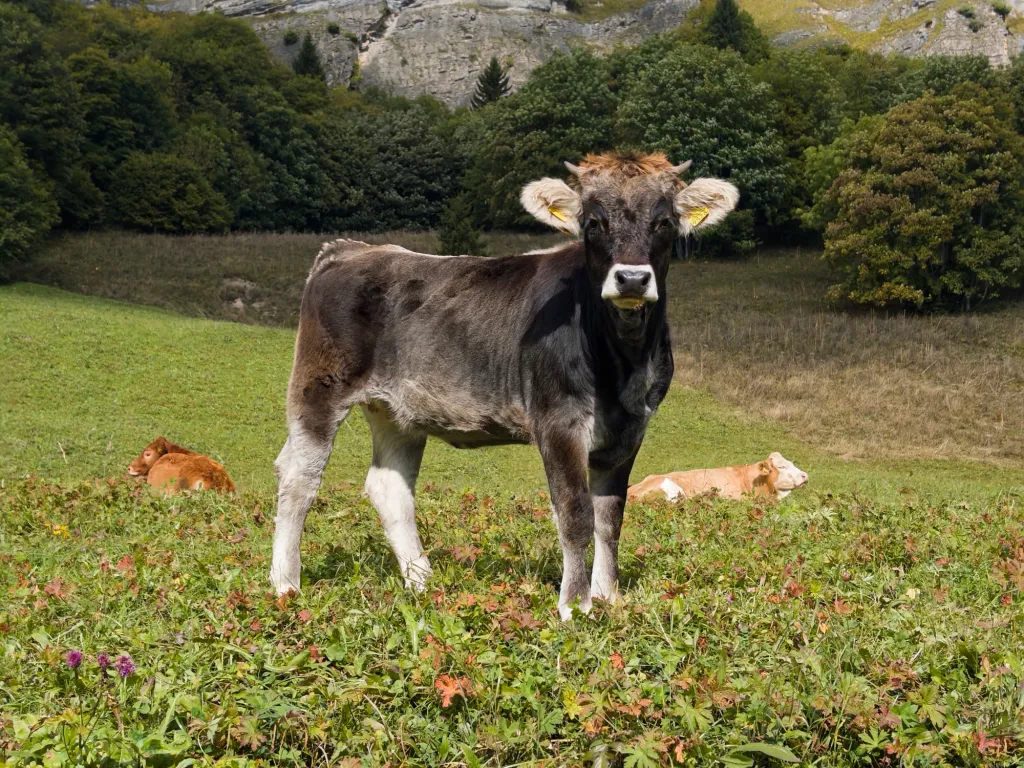
Swiss cows spend the winter in a barn in a valley, without a cowbell and eating hay. In May the cows are anointed with a bell and walked up to their alpine meadows, the “pre alps” below the rocky peaks. There they dine on lush grass grown in calcium rich limestone soils. By September the season is over and it’s time for the plump cows to descend from the alps to their valley barns.
This descent from the meadows has been celebrated for thousands of years, and is locally called Les Désalpe. We were lucky to be near Blonay, just above St. Légier, for this year’s Désalpe. All we knew from the simple event flyer was that it’s a big party, it starts around 11 a.m., there’s a disco in the evening for the youth, and it’s somewhere in Blonay.
We took the small mountain train from Vevey to central Blonay and stood around for a while with some others waiting for the cows, until someone told us neophytes that the cows weren’t due until 1:30 p.m., and you might want to grab some lunch over in that big food tent over by the local chateau. So we did.
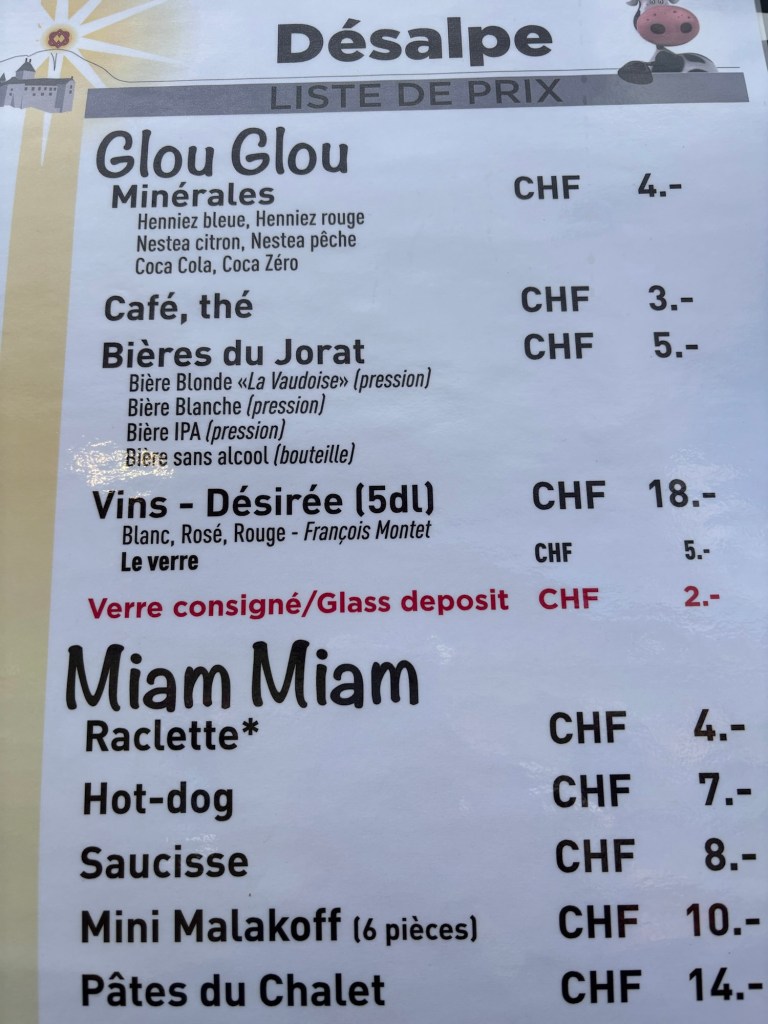
Here’s your guide to Swiss French festival food. Glou Glou (Glug Glug) is the drinks, Miam Miam (yum yum) is the food. Henniez blue is still water, Henniez red is fizzy. The non-alcohol beers aren’t too bad, better than the US N-A beers (maybe because they still have 0.5%). Raclette is fried cheese, and in my opinion is kinda only worth it in a more authentic setting, like in a mountain auberge restaurant with a wood fire. This raclette came with a wimpy sterno setup. Saucisse is sausage and is always a strong choice in Switzerland. They had two kinds grilled up. A Malakoff is a fried cheese ball. Pâtes is pasta, not a meat spread. In this case “Pasta of the House” was Mac-and-cheese with ham.
There was a good build up to the arrival of actual beasts in the streets. First the large decorative cow bells come out.
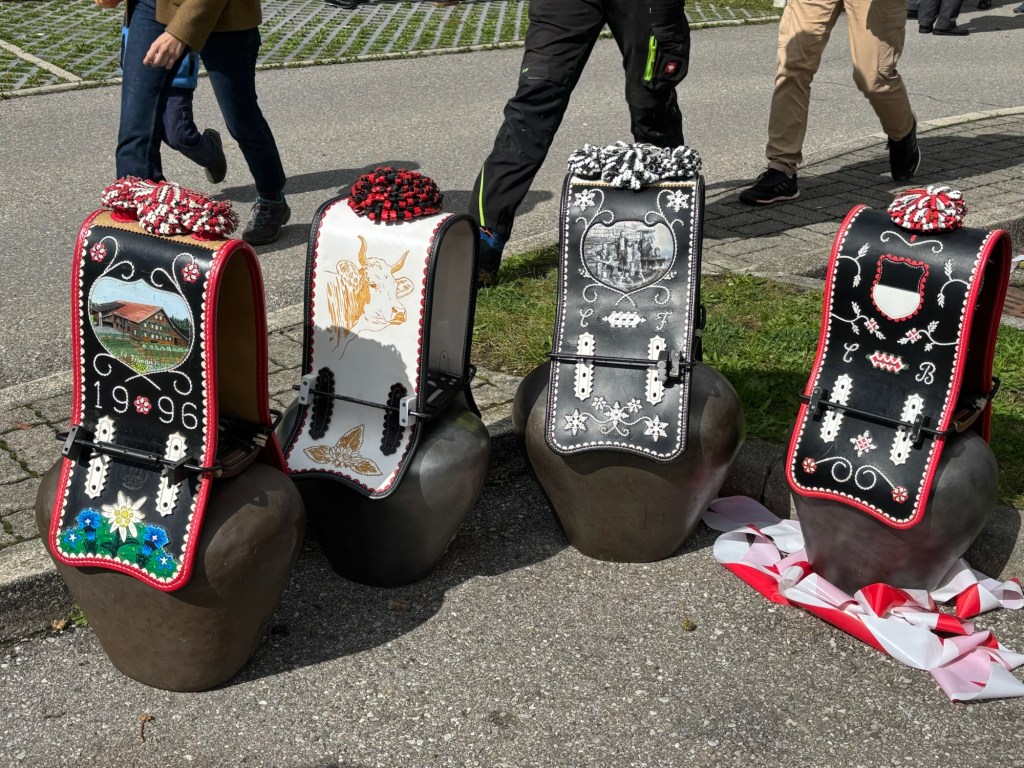
These are carried through the streets in a kind of Swiss drum corps.
Next come Swiss horns along with a flag man. While they were playing there were still cars trapped on the parade route looking for a way out.
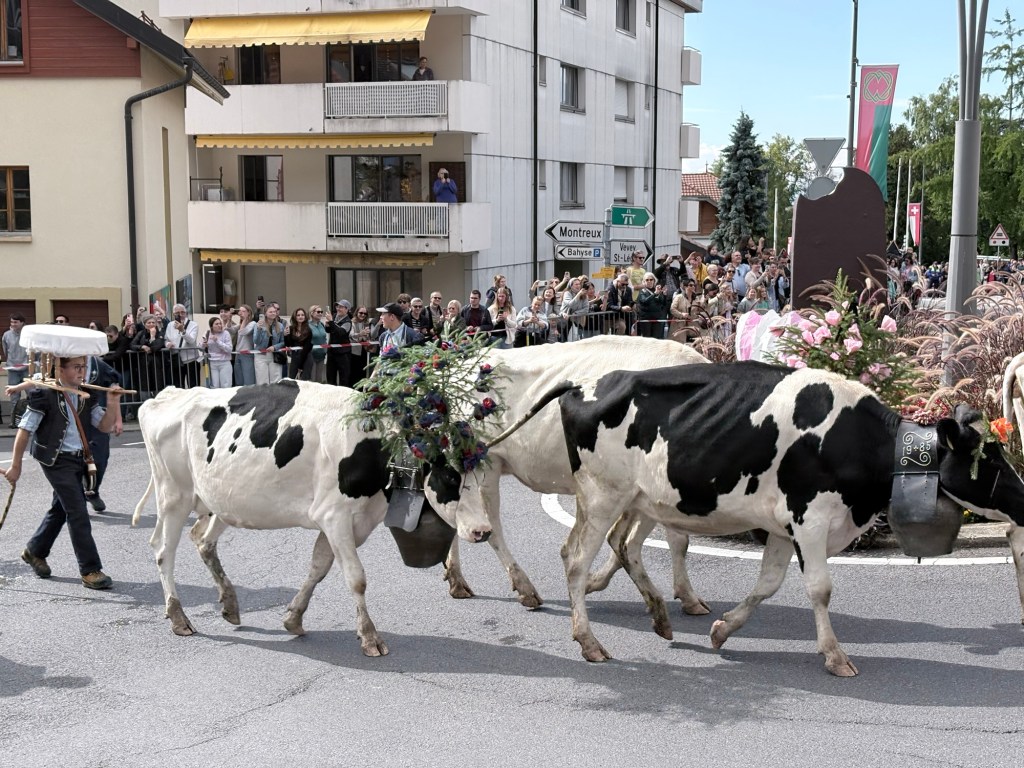
And then the sound of approaching cow bells, and finally the cows! The Queens are all dressed up with flowers and trees.
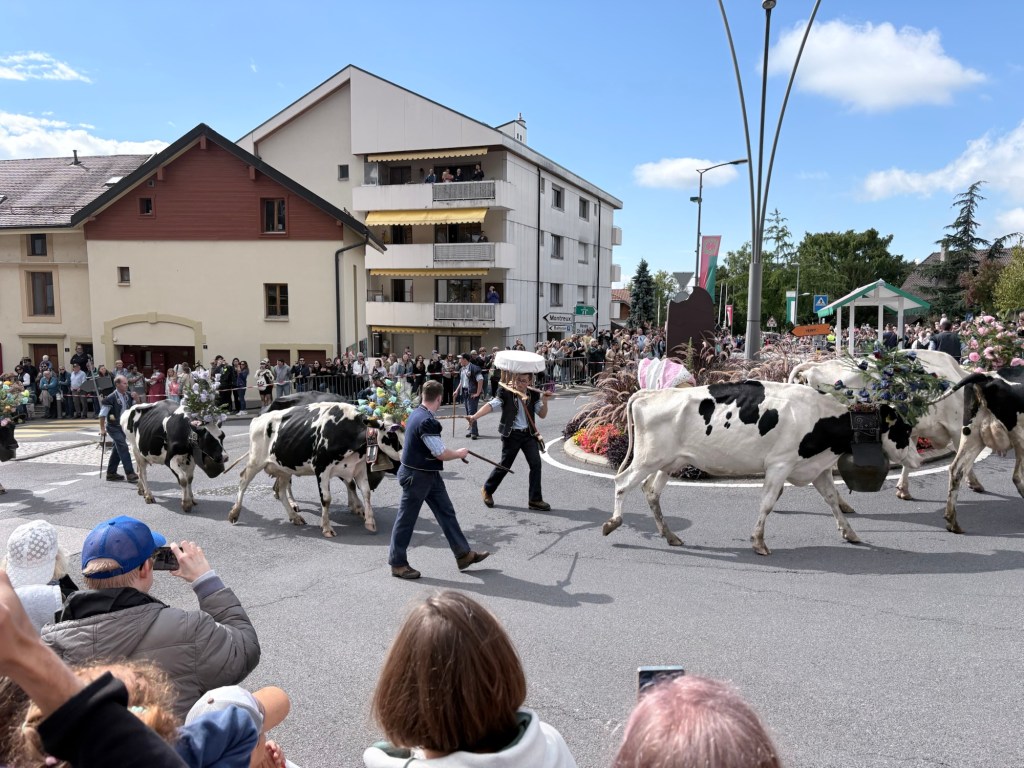
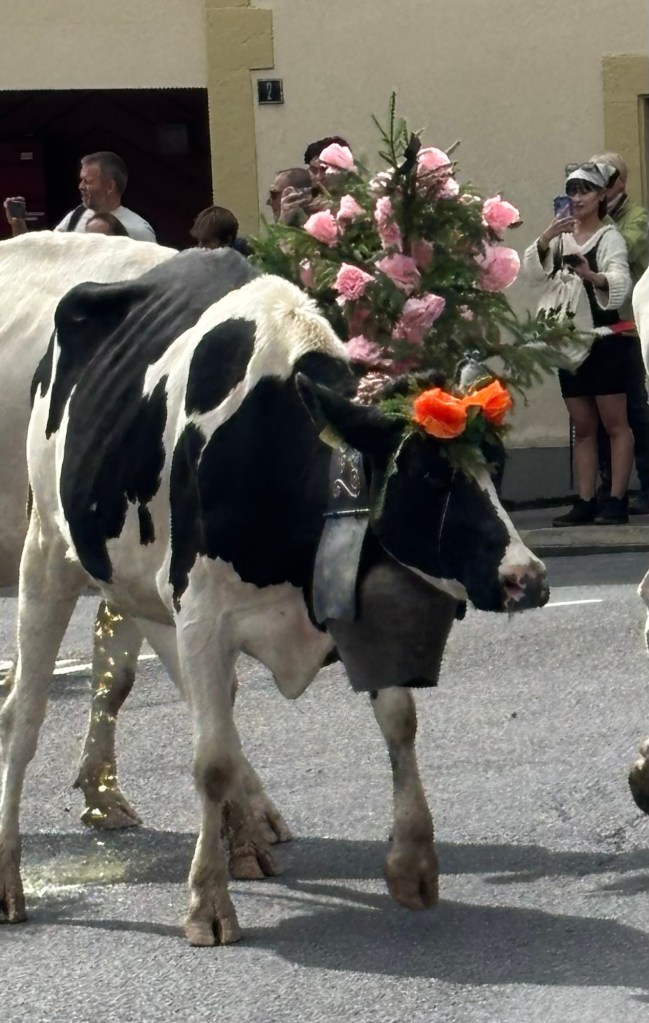
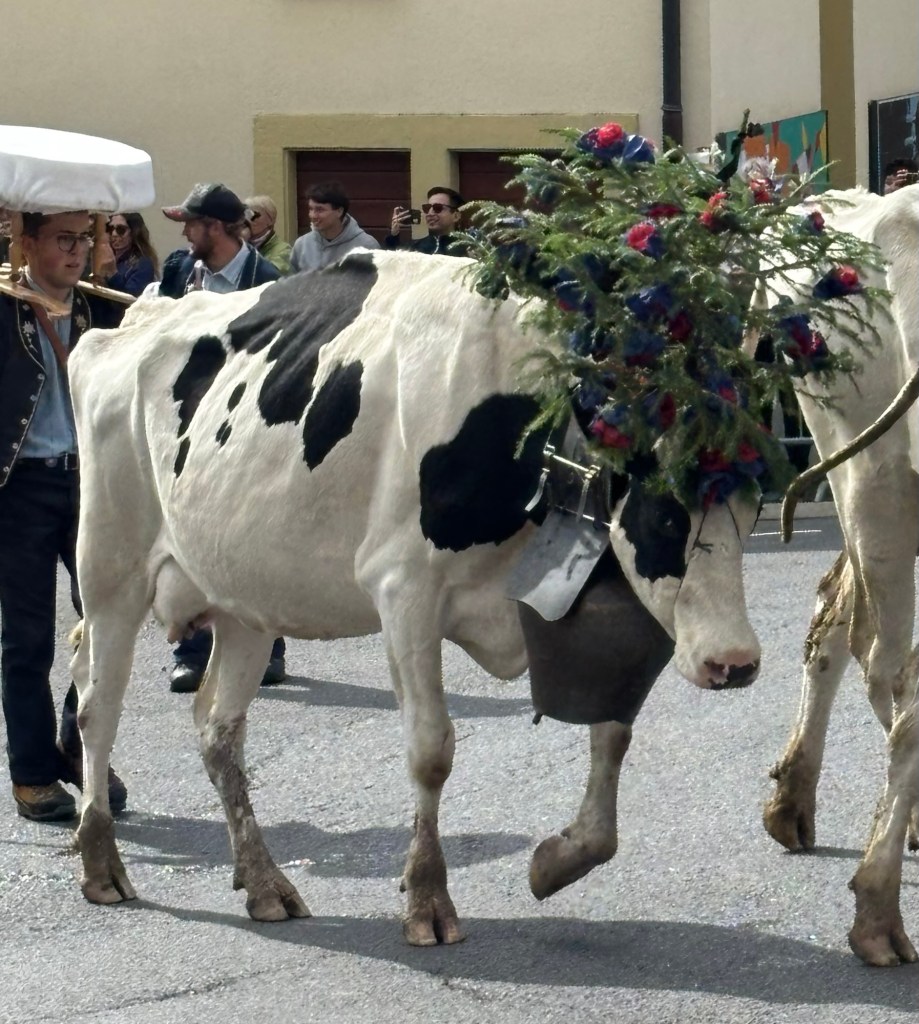
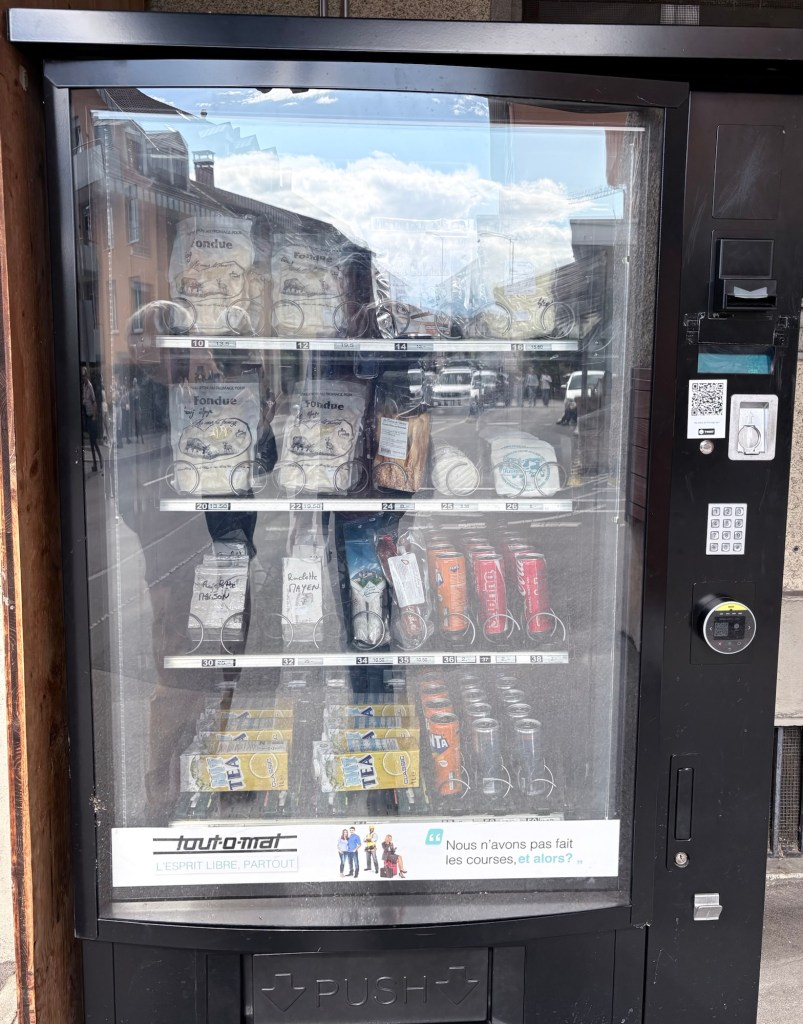
The three herds came down at different times, so we explored the town in between the bovine excitement. Here we found a fondue vending machine outside the local dairy.
But wait, what’s that? More cows! Back to the parade route! At the end of this video a guy catches a ride on a horse cart but drops his phone. Paul picks it up and chases down the cart…
That was the last herd, so it was on to the next thing. On weekends the train museum wheels out a classic old narrow gauge steam train pulling open air wooden cars. It runs on a level track above Lake Geneva, between Blonay, above Vevey, to the small station of Chamby, above Montreux.
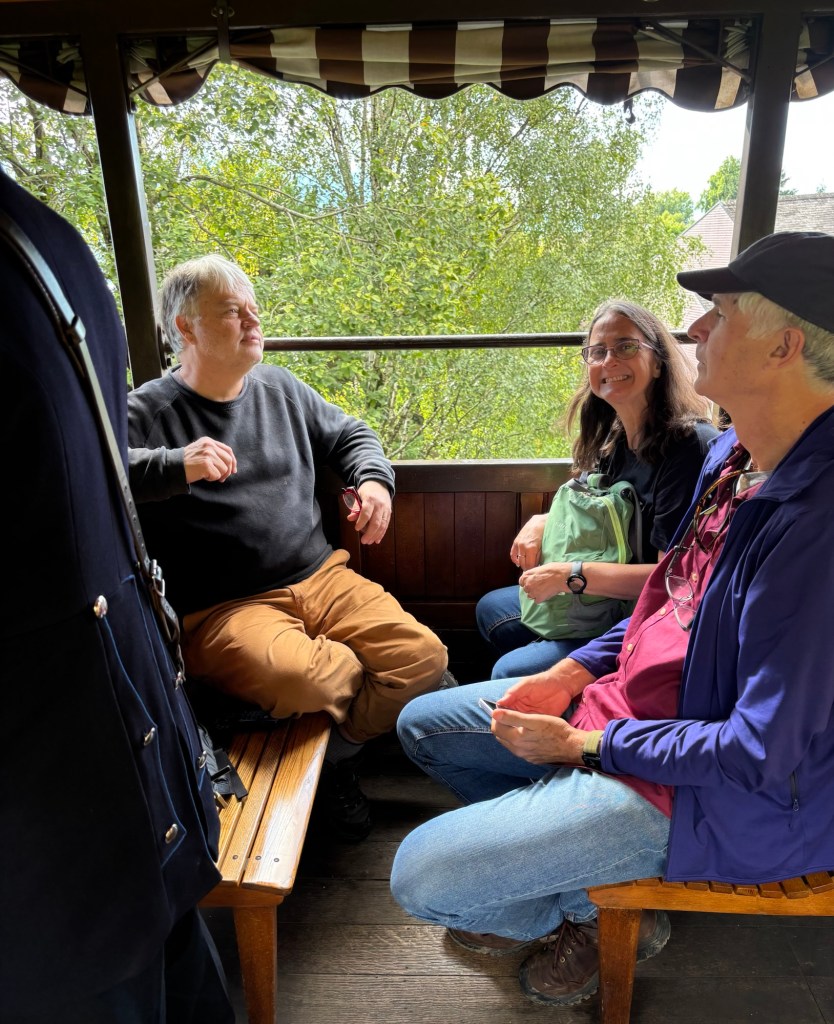
Most people do the return trip, but we got off in Chamby and caught the MOB train up to Les Avants, through a tunnel and into a pretty mountain valley leading to Gstaad and Gruyère.
Michele and I have been to Gruyère, witnessed the robot flipping rounds of Gruyère cheese and climbed up to the touristy castle for a cheesy meal. This time we got off one stop before in Villar-sous-Mont and went for a walk.
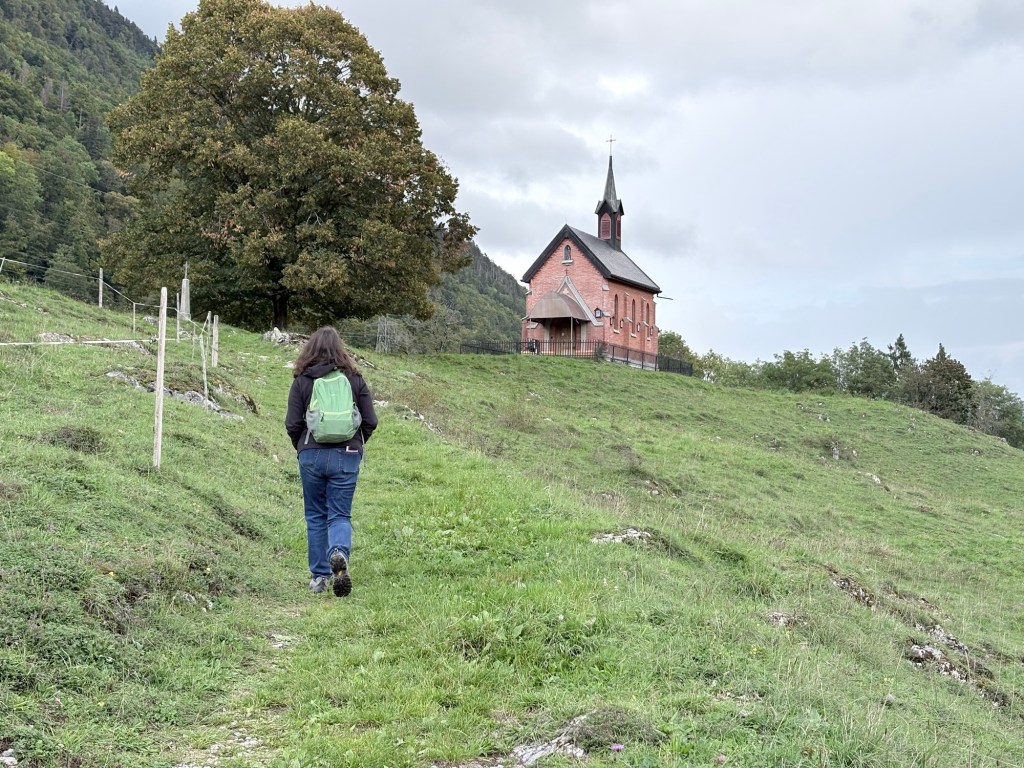
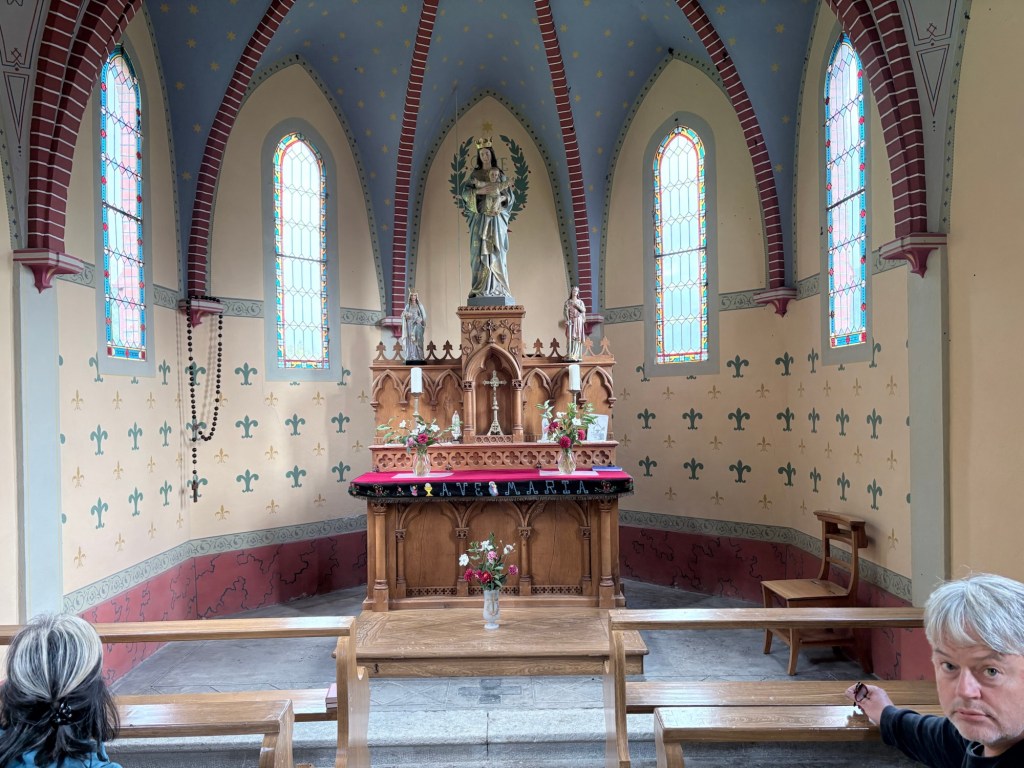
The small church was charming.
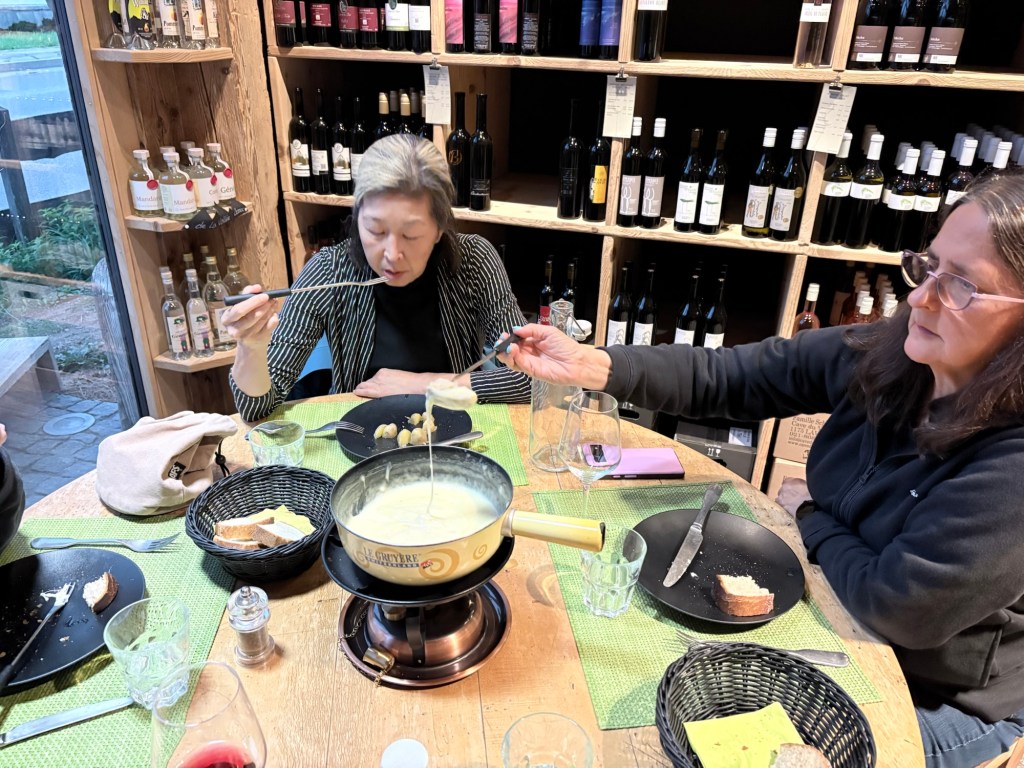
We returned through town and treated ourselves to a fondue. I enjoy a cheese fondue, but please, no more often than once a year. In the 1930’s the Gruyère cheese union played a big part in promoting fondue as a way of selling more Swiss cheese.
 Ken Chin-Purcell