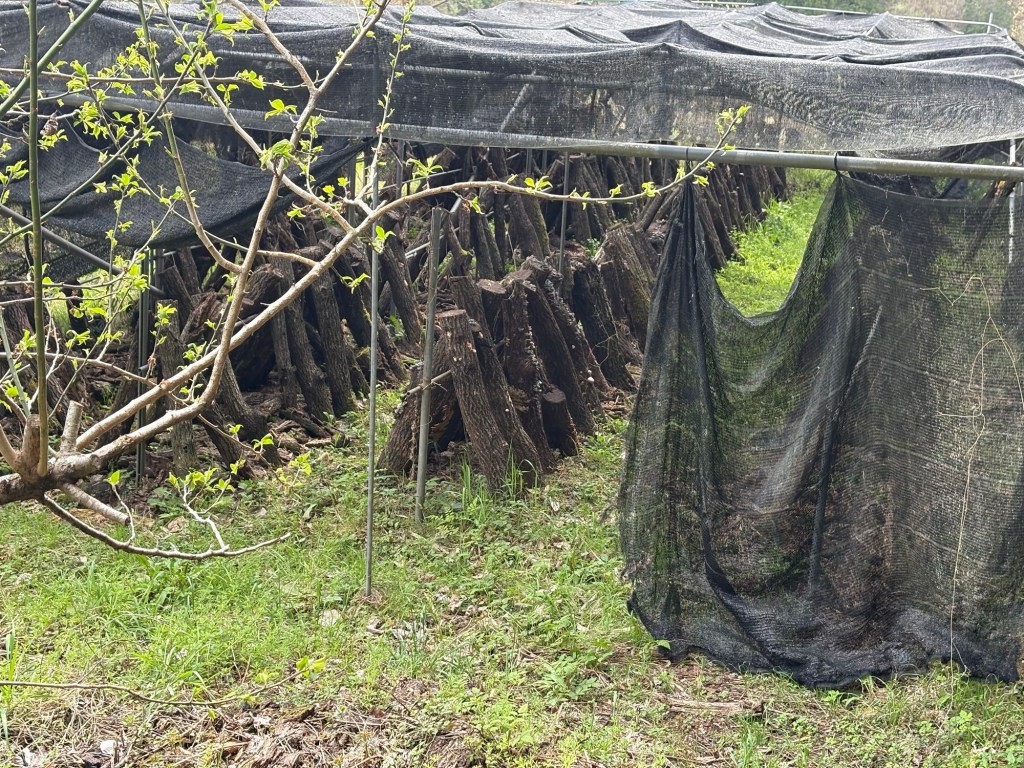
Our last full day of the tour started with a walk to some small temples with carved Buddhas. We passed a small mushroom farm where shiitake logs like the ones we saw the day before but a year older had been stacked. It’s towards the end of the season so there were only a few shiitakes left growing.
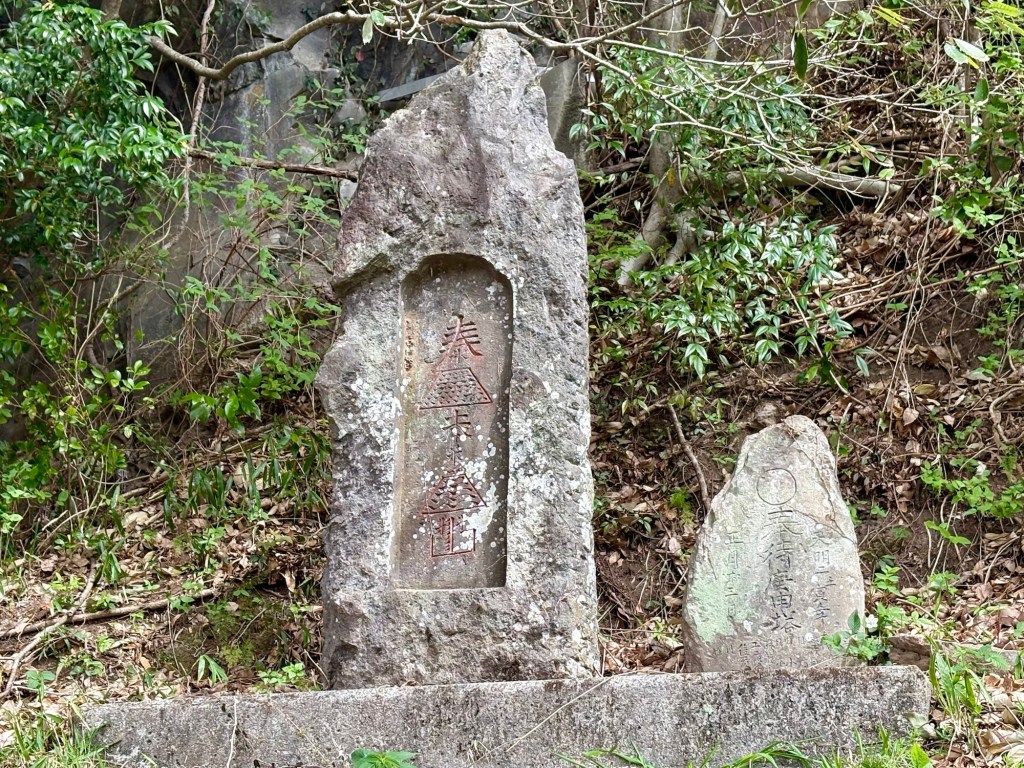
This Buddhist shrine was focused on healing, so Buddha’s sidekicks are looking a little more sympathetic and less fierce. We also passed an interesting memorial stone with some pyramid shaped drawings on it. Drawings of the castle? Fields?
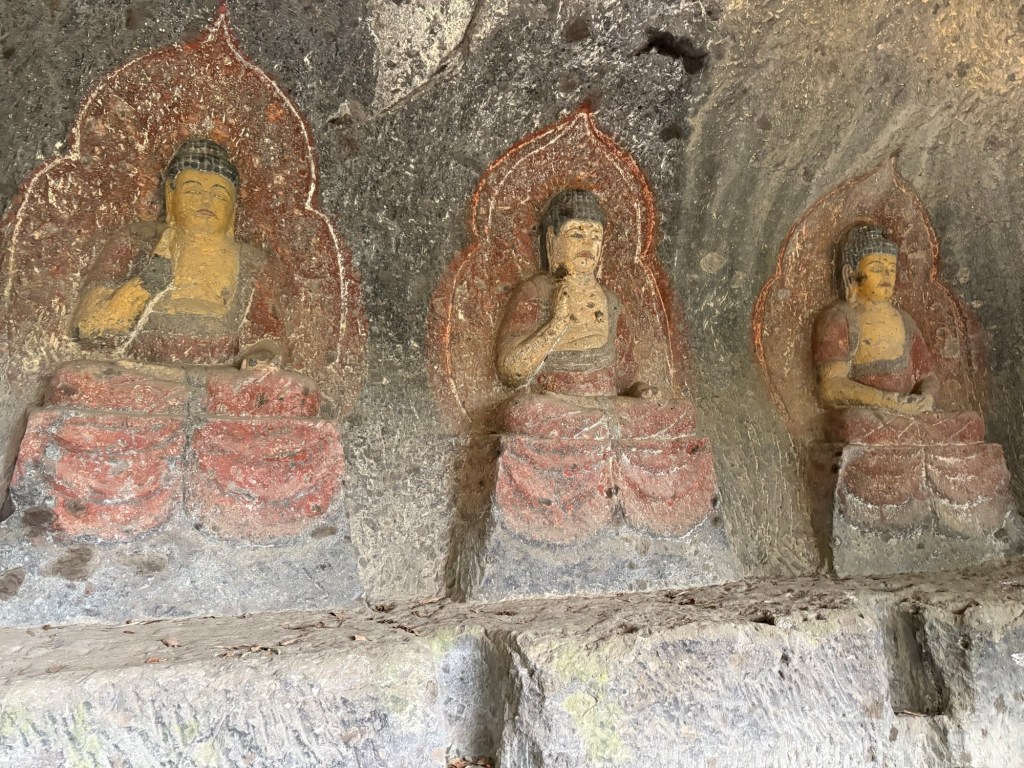
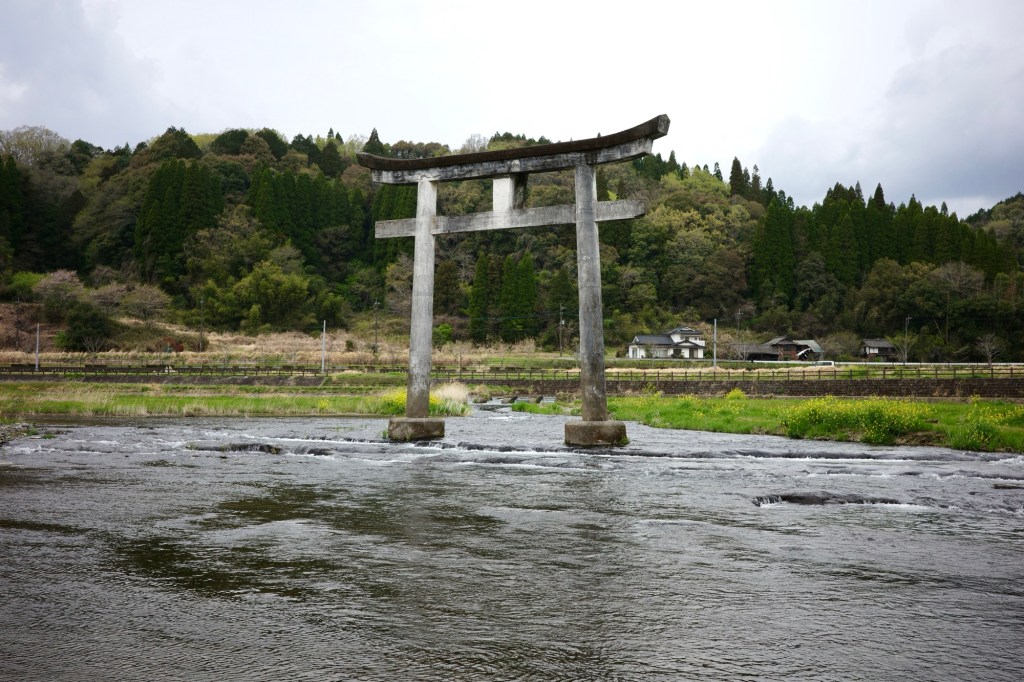
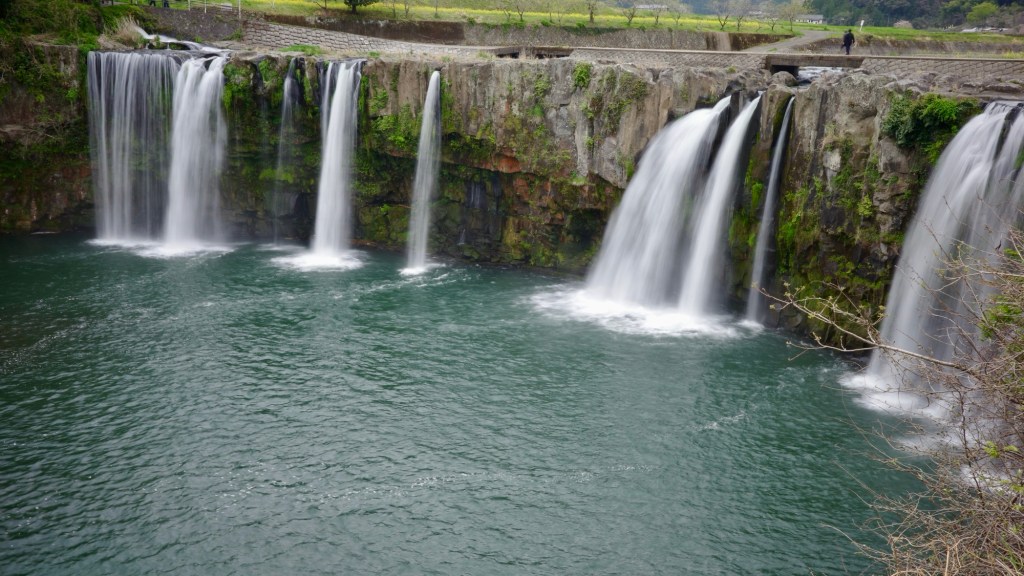
So it was two small Buddhist temples on one side of the hill, and then a walk up and over to a Shinto shrine on the other side that looked over a horseshoe shaped waterfall. The first torī gate leading up to the shrine was in the shallow waters above the falls. When the local guys in their loincloths take the portable shrine out at festival time they tromp through the water under that tori gate, barefoot, carrying a heavy float. What would a matsuri be without a little danger.
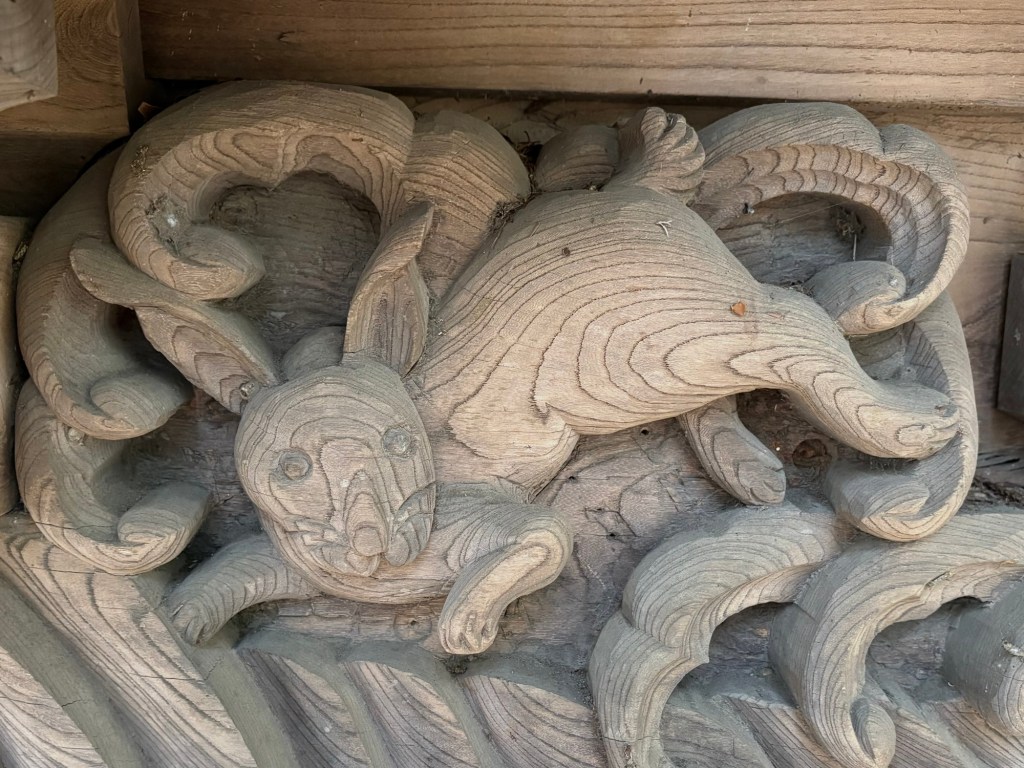
Mara, thought you might like the rabbits.
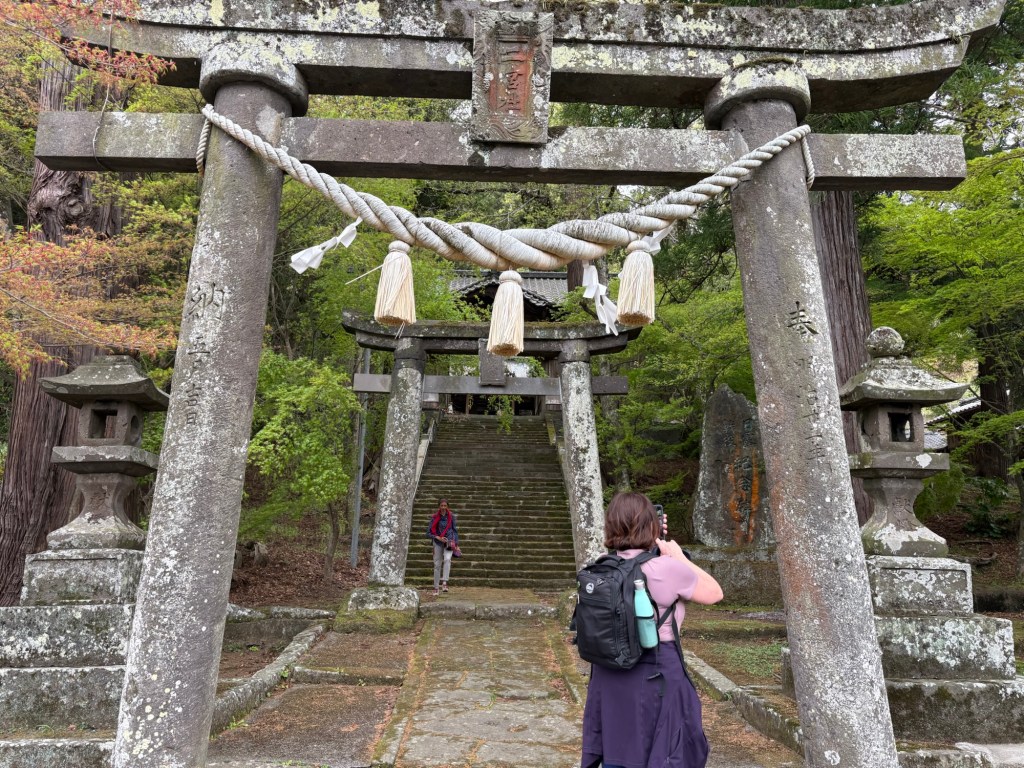
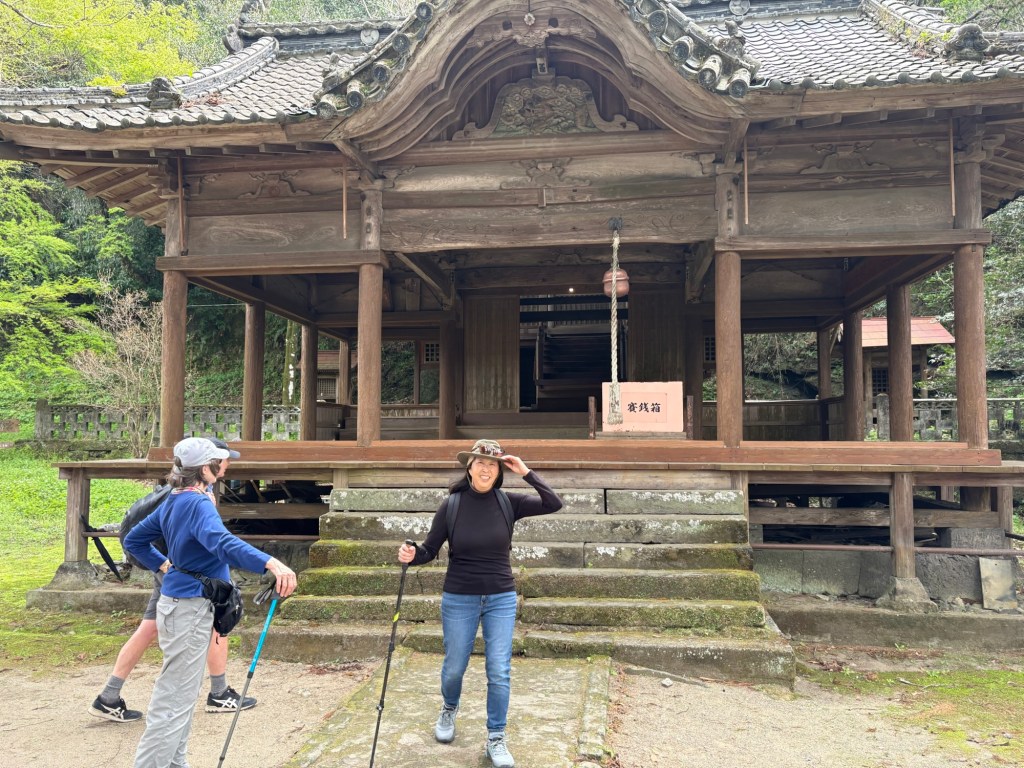
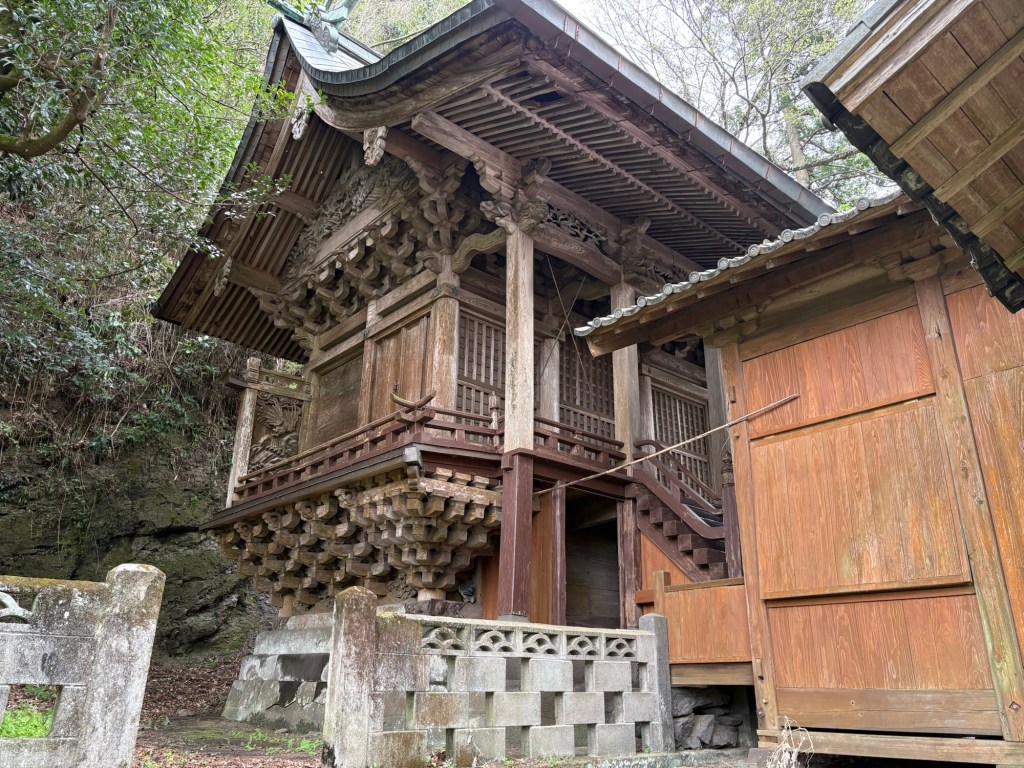
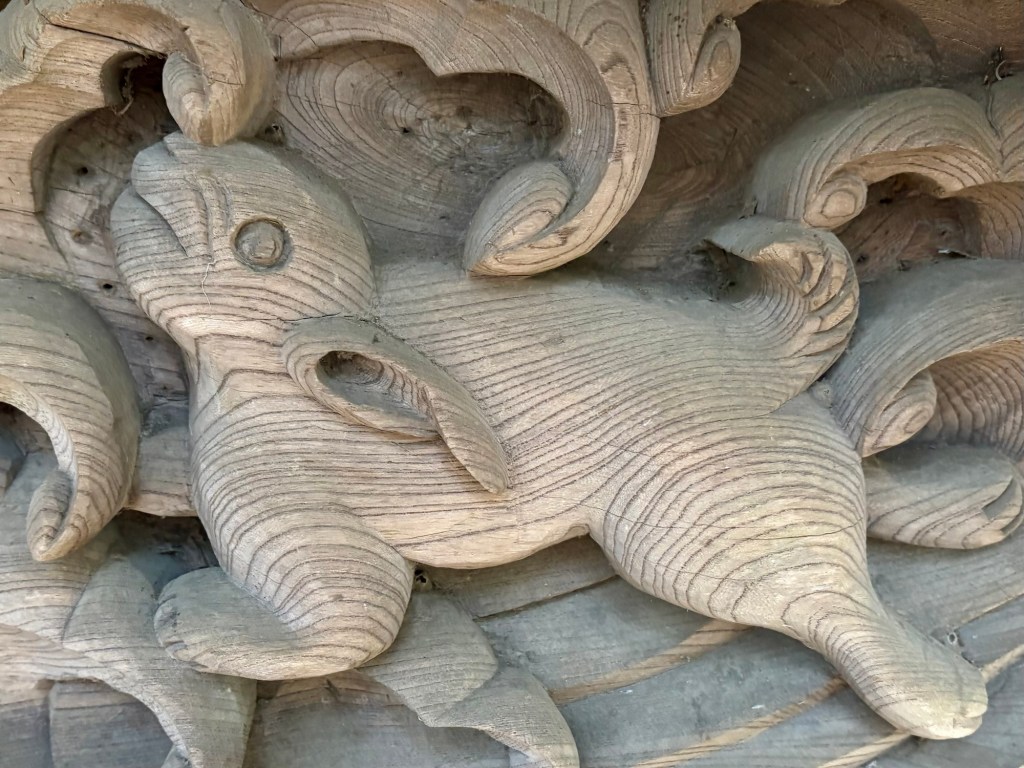
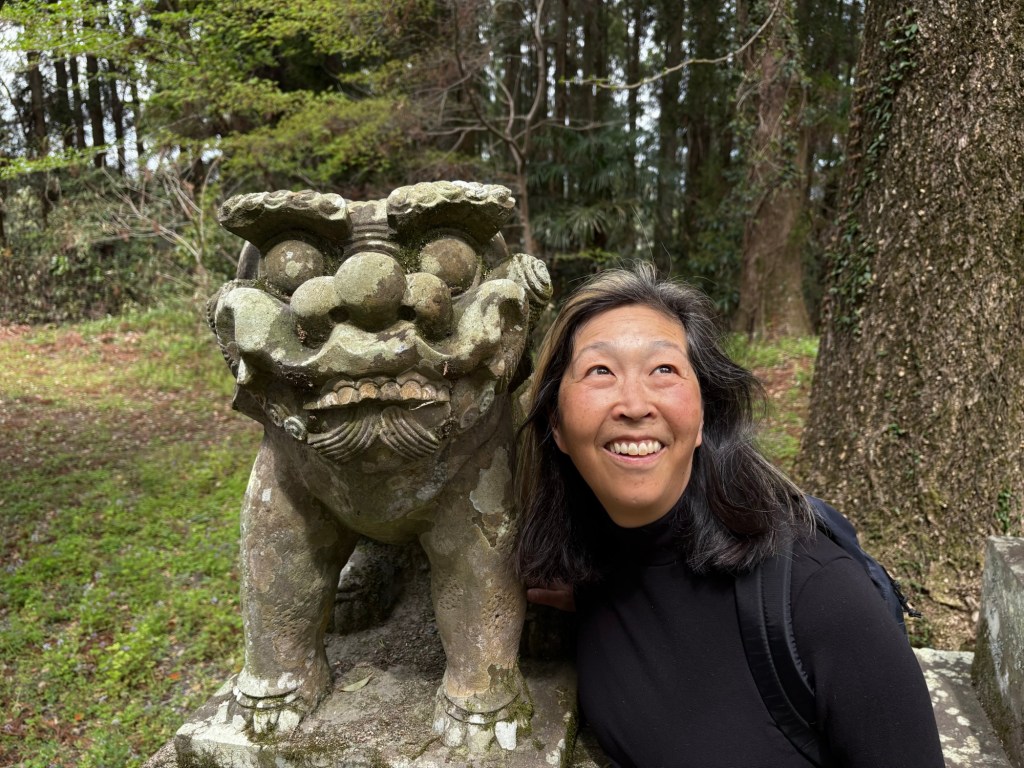
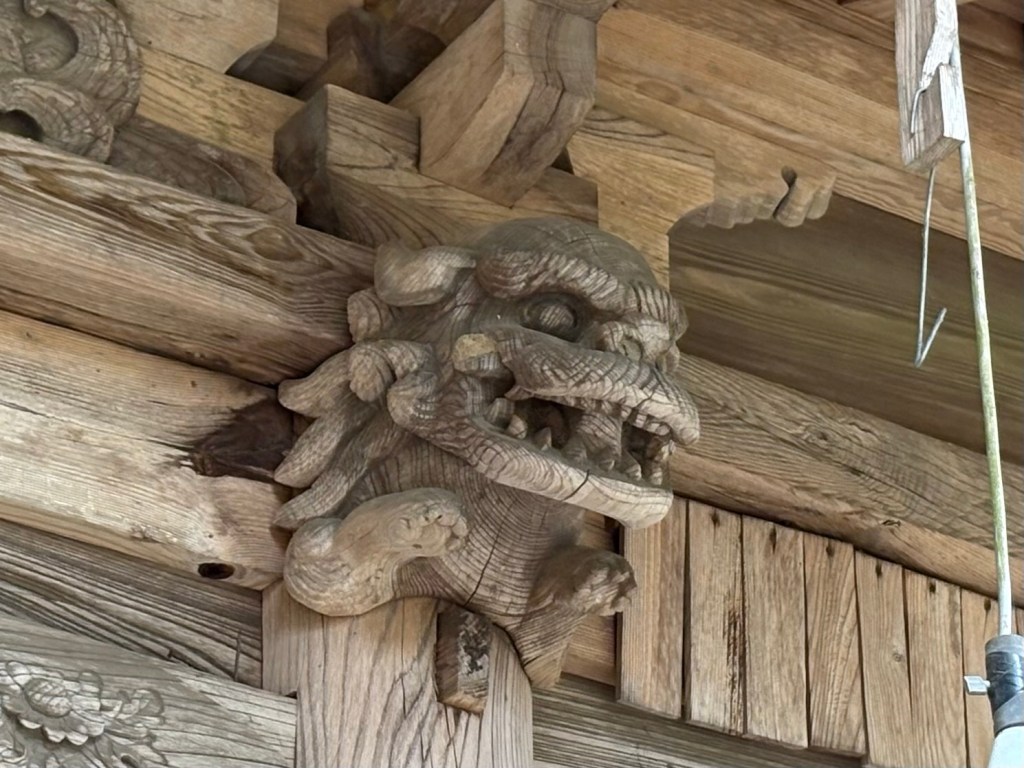
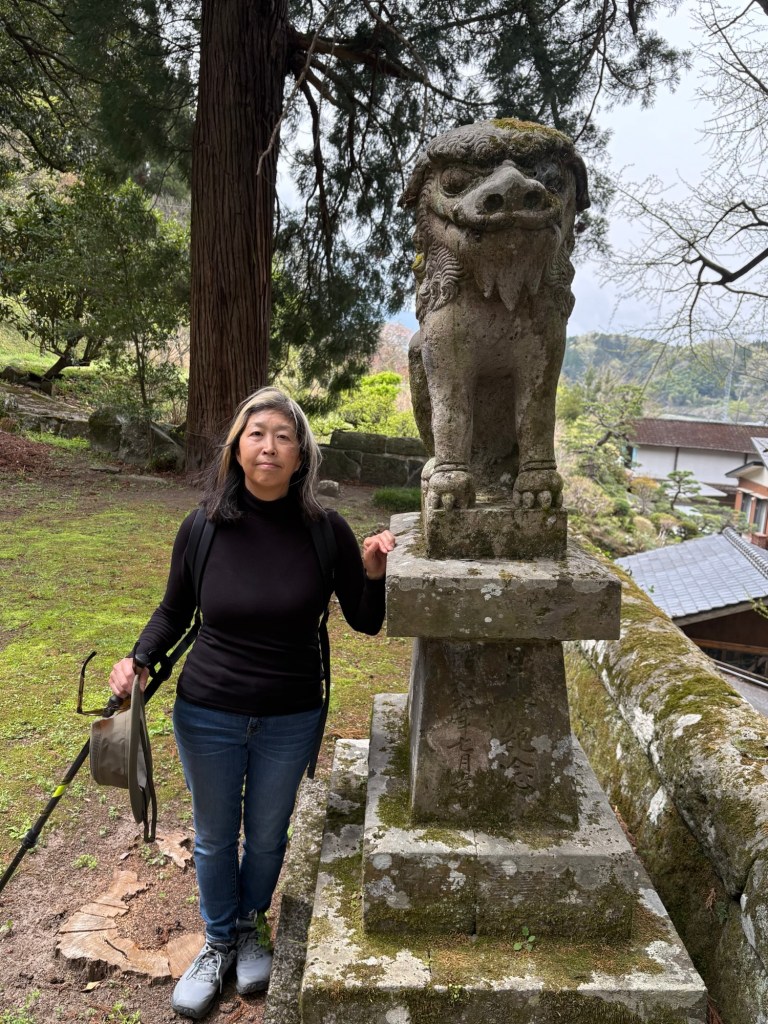
As usual, Shishi was helping to guard the shrine.
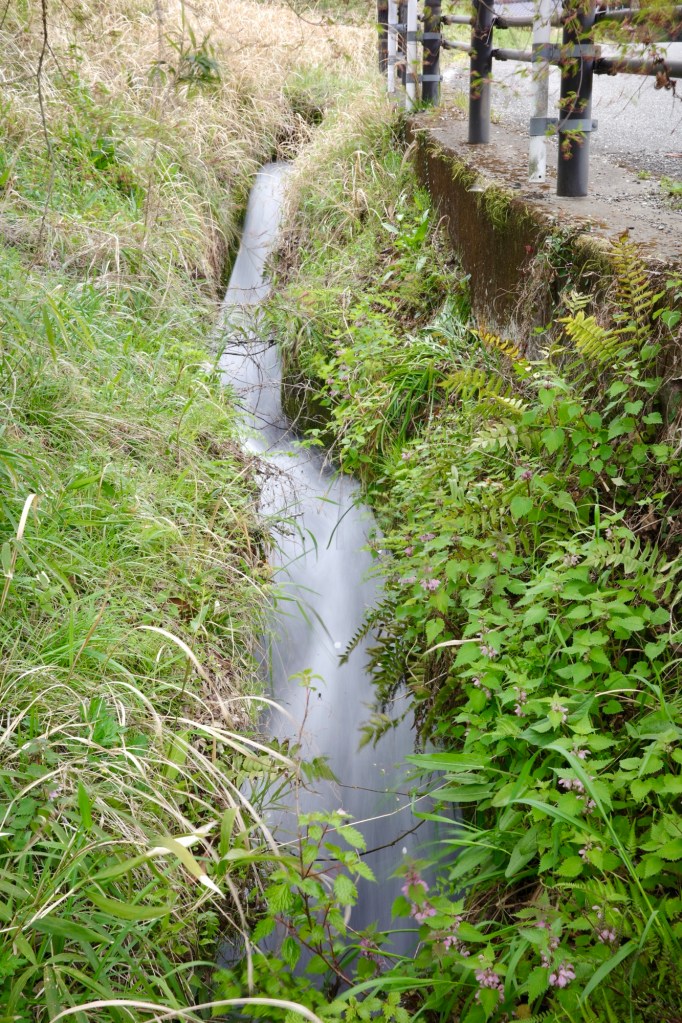
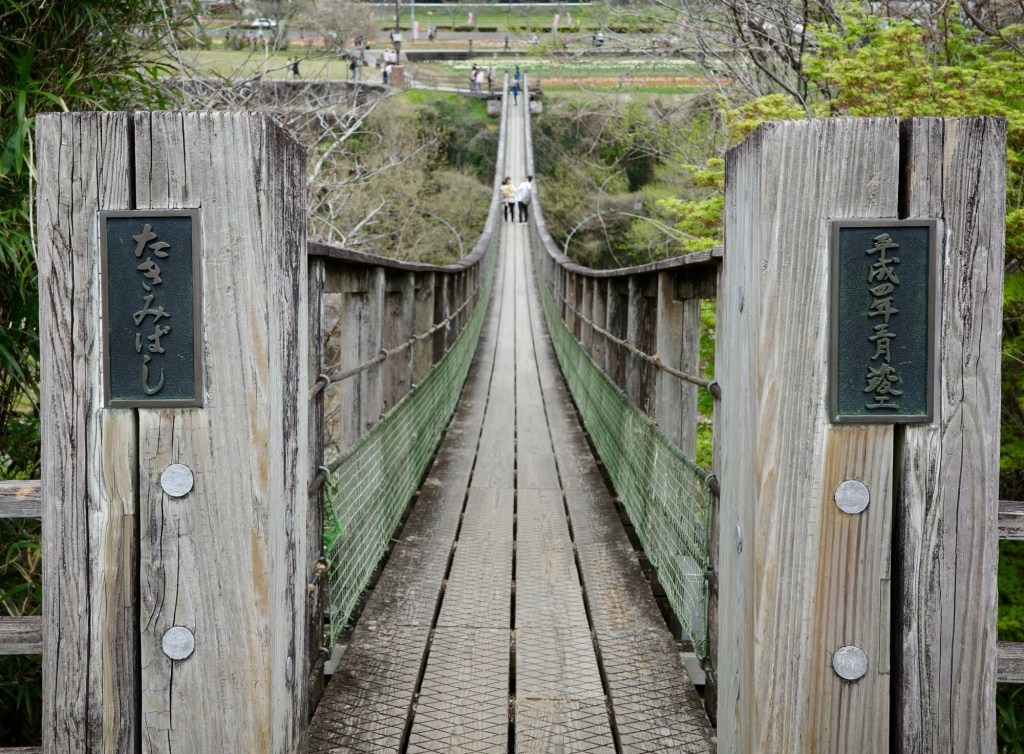
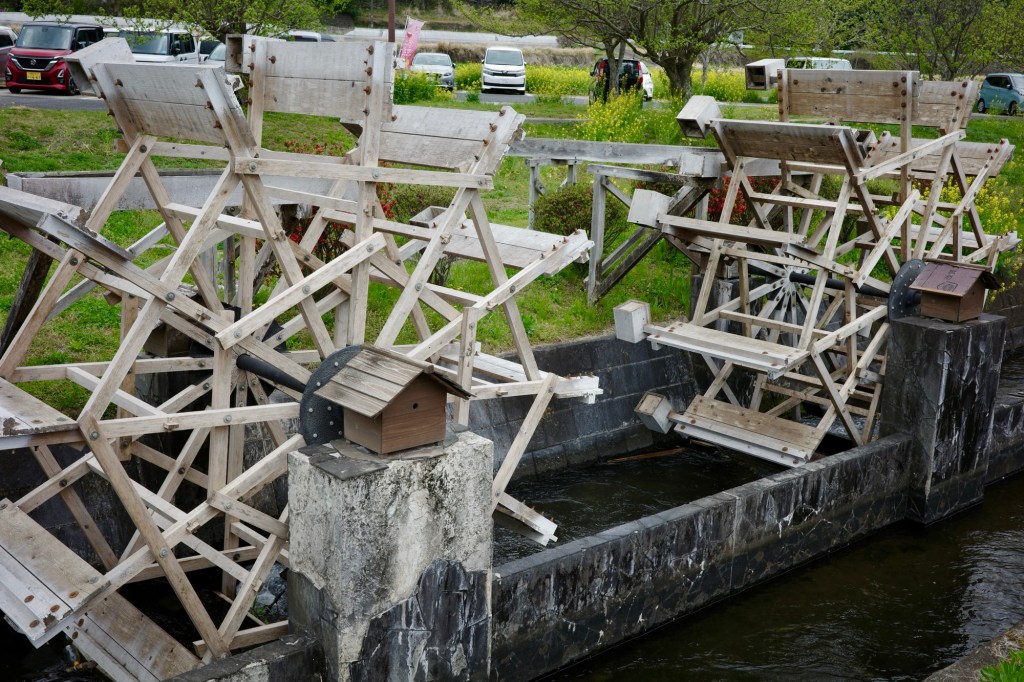
The waterfall had a pedestrian swing bridge that wasn’t nearly as long or dramatic as the Dream Bridge from the day before. It was a little more exciting though, with its weathered planks creaking (are they sturdy?) and loose bounce as I walked across.
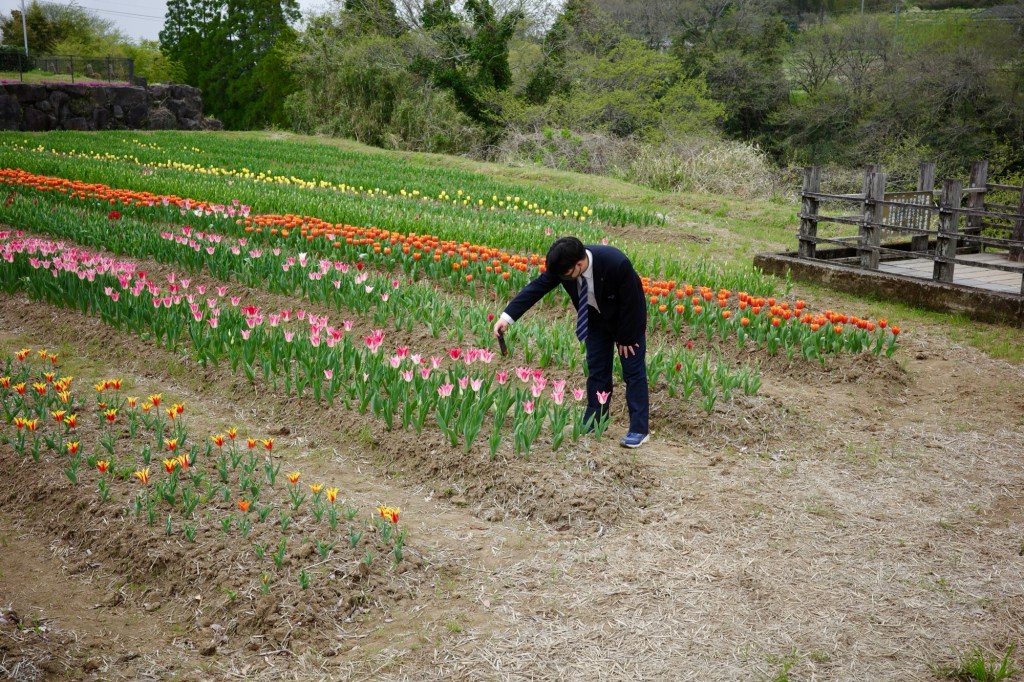
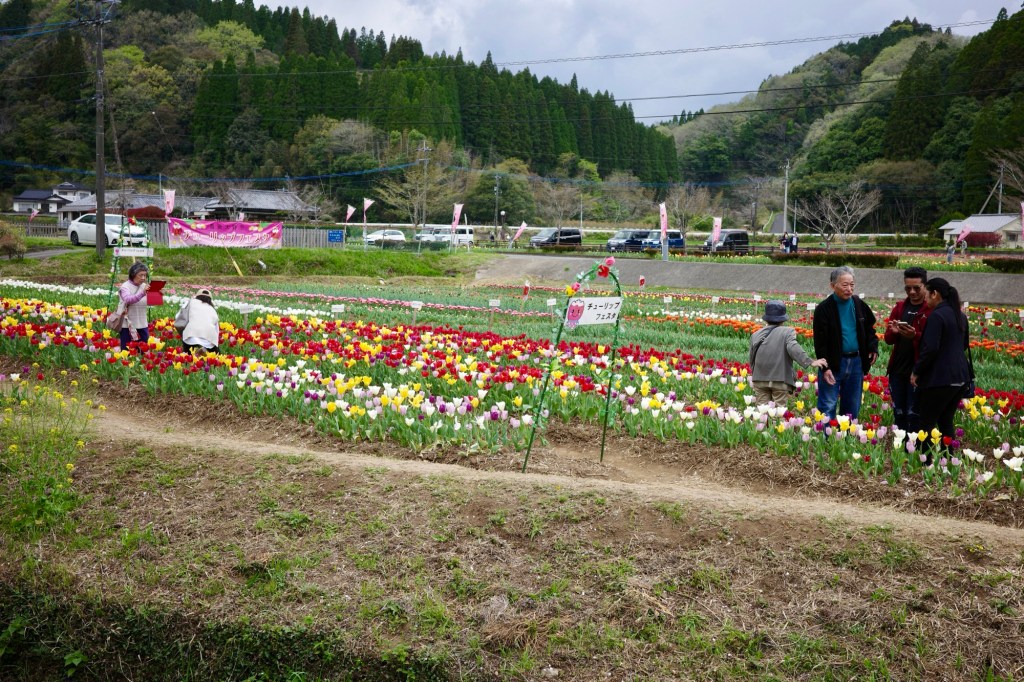
On the other side visitors admired the tulips.
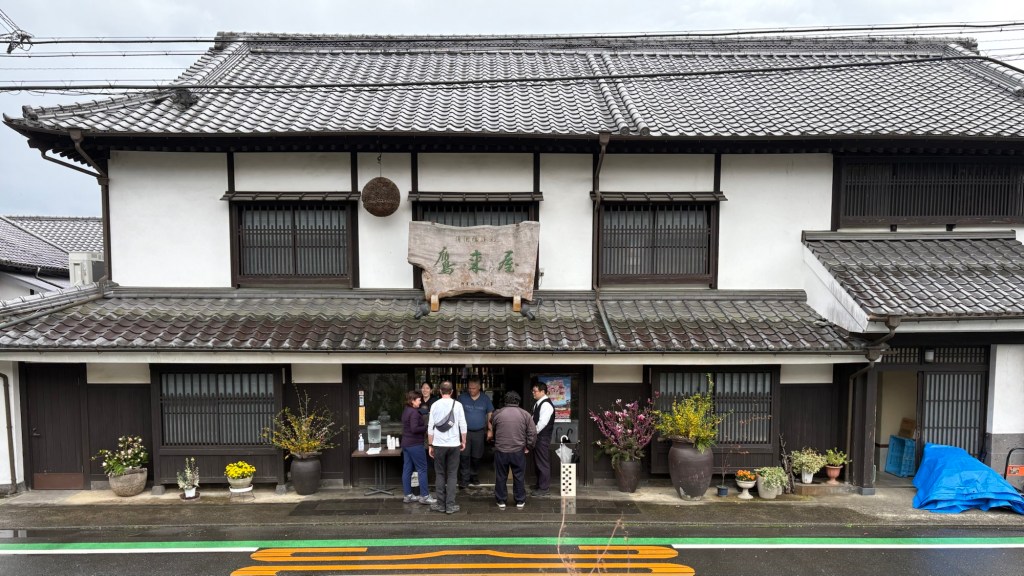
We walked along a farm road over to Takakiya, a small sake brewery. Along the way our weather luck ran out and we donned our rain gear for the first time. The shuttle vans were very thoughtful and found us on our skinny road, so we didn’t have to walk the final few minutes in the rain. All in all we had excellent weather while outside.
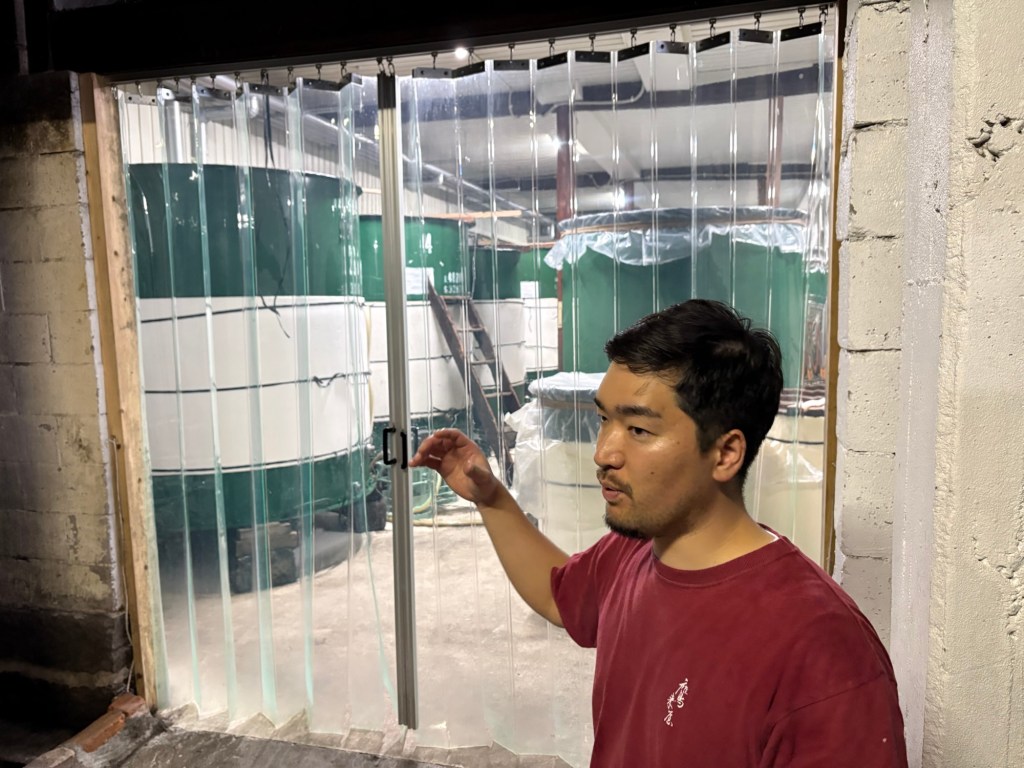
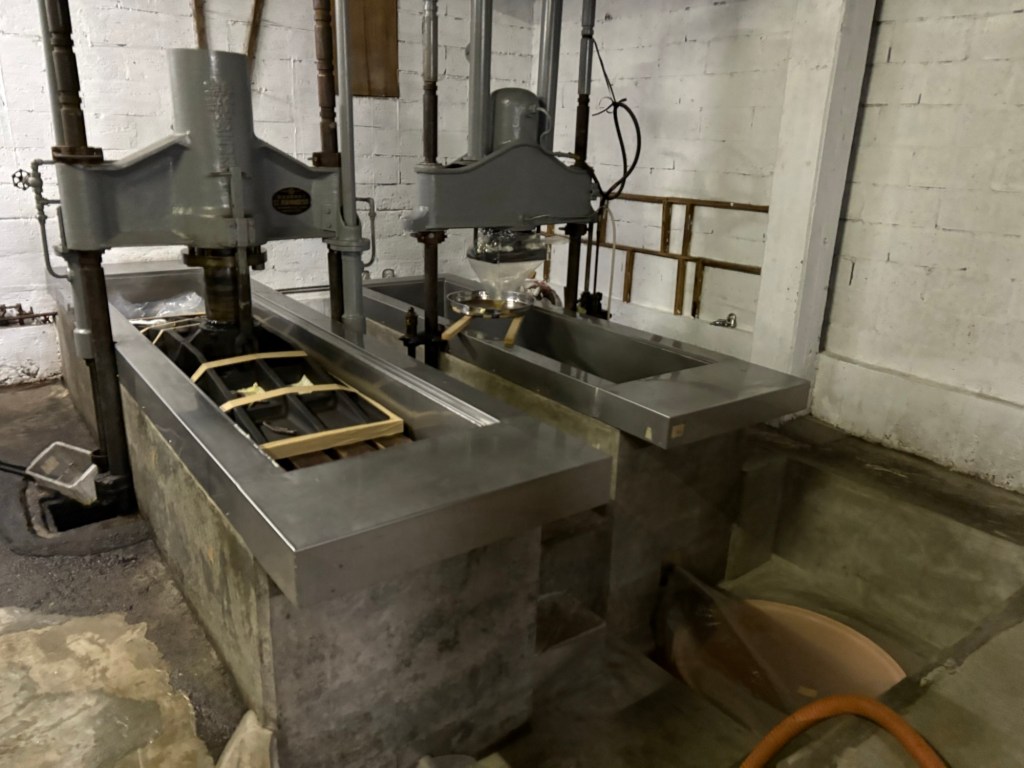
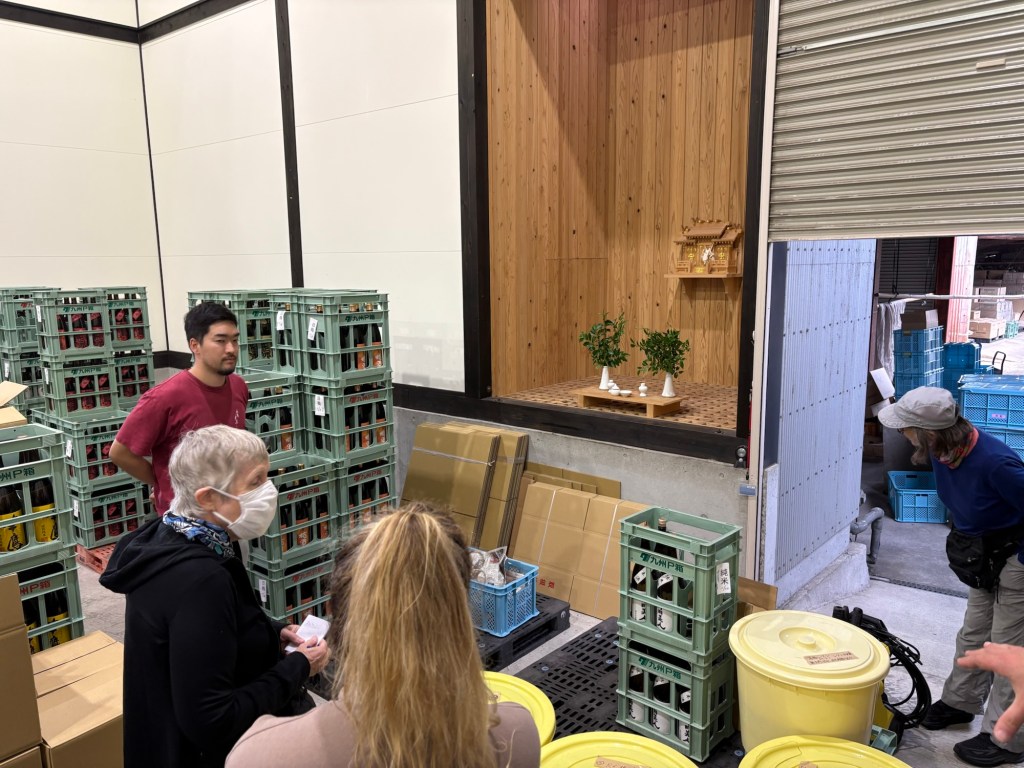
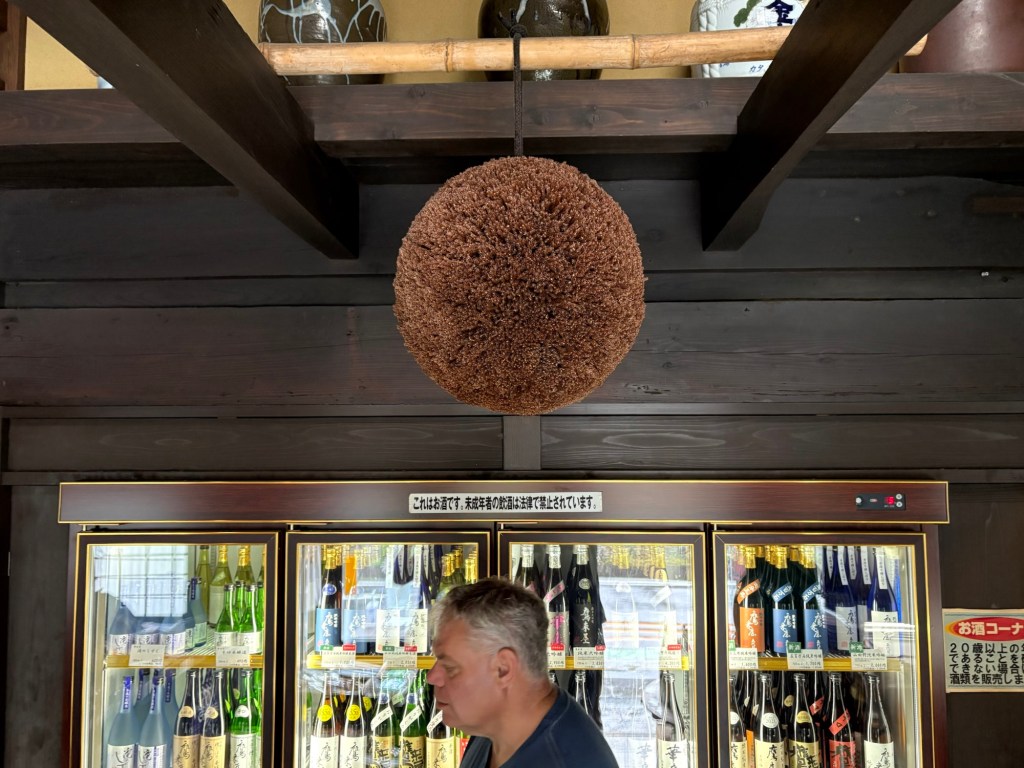
Hamajima Hirofumi, the sixth generation brewer of the Hamajima family, gave us a tour. Sake starts with steamed rice that is infected with koji mold, which converts starch to sugar, then fermented. They can only brew in the winter time in Oita because the koji doesn’t like warm weather. We were there just at the tail end of this season’s production run. There was a special shrine above the all important water well, and a ball of cedar fronds showing that this year’s sake was ready and fresh.
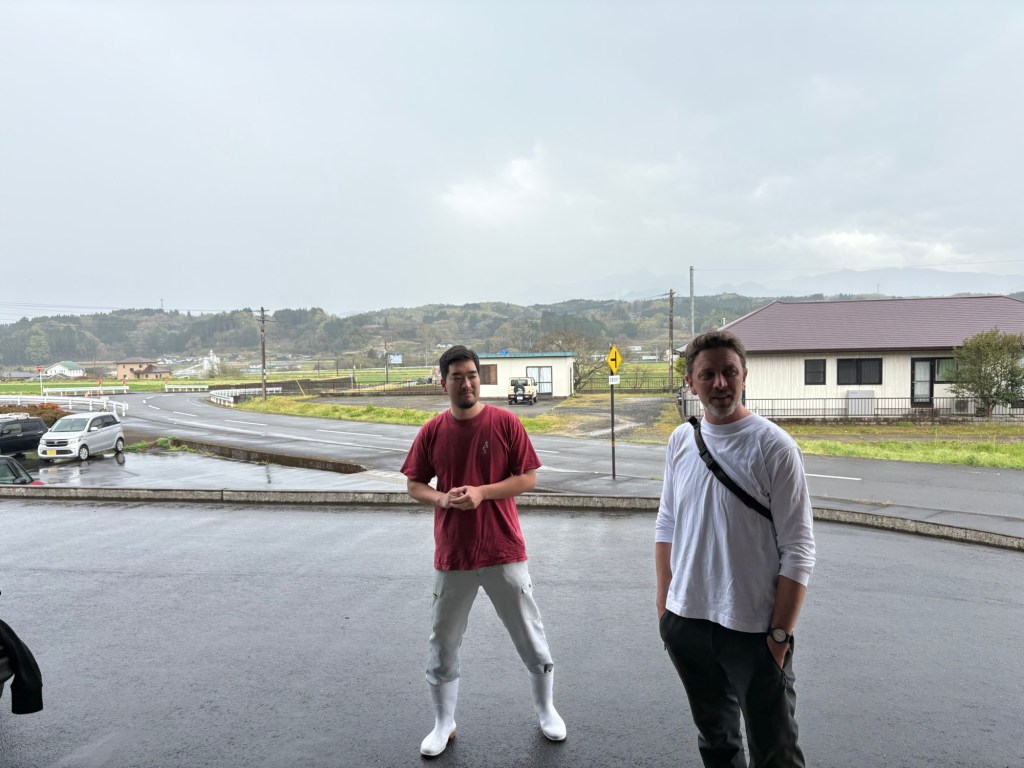
After they wrap up production they switch gears and grow their own rice! In back of Hirofumi-san are their paddies. Hirofumi said that a brewery growing their own rice is rare in Japan, but they were inspired by western wineries and how the better wineries grow their own grapes.
The Irish contingent in the group were pouring sake on the ride to Beppu in the van. A few sips were good for me on the twisty mountain roads.
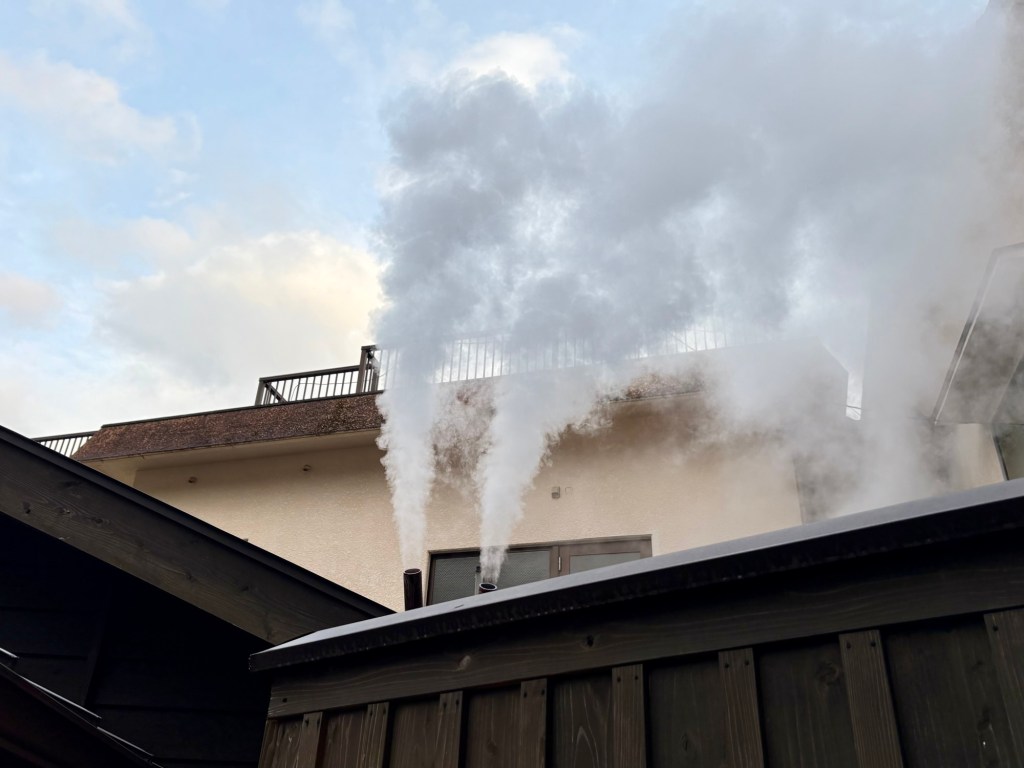
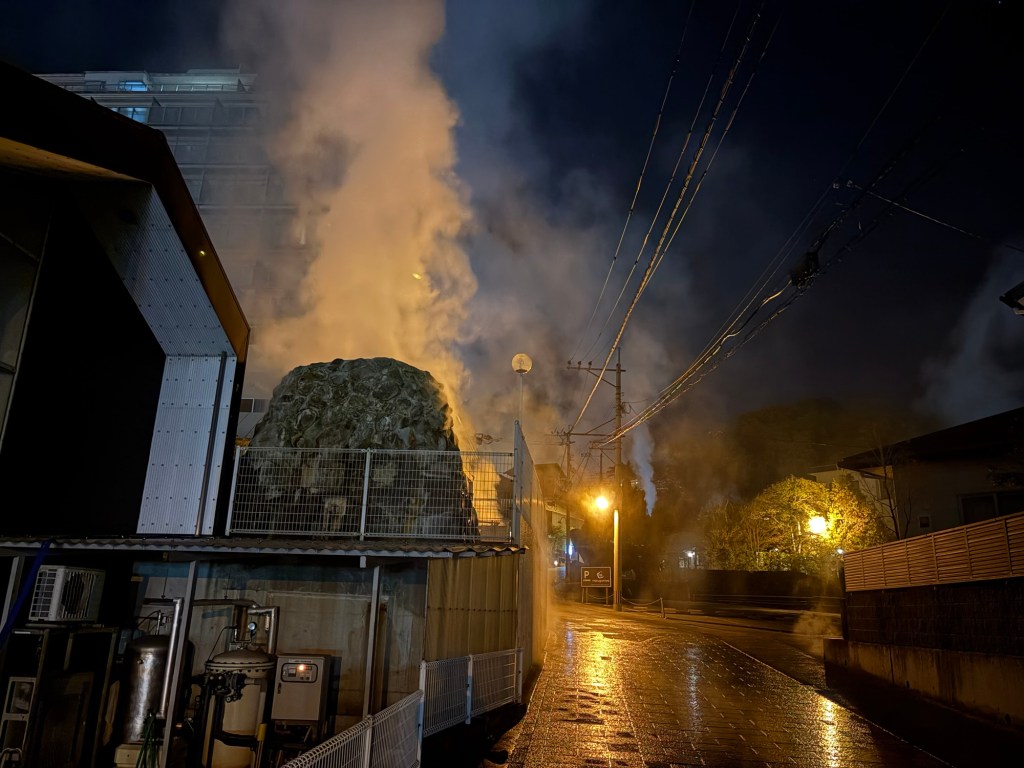
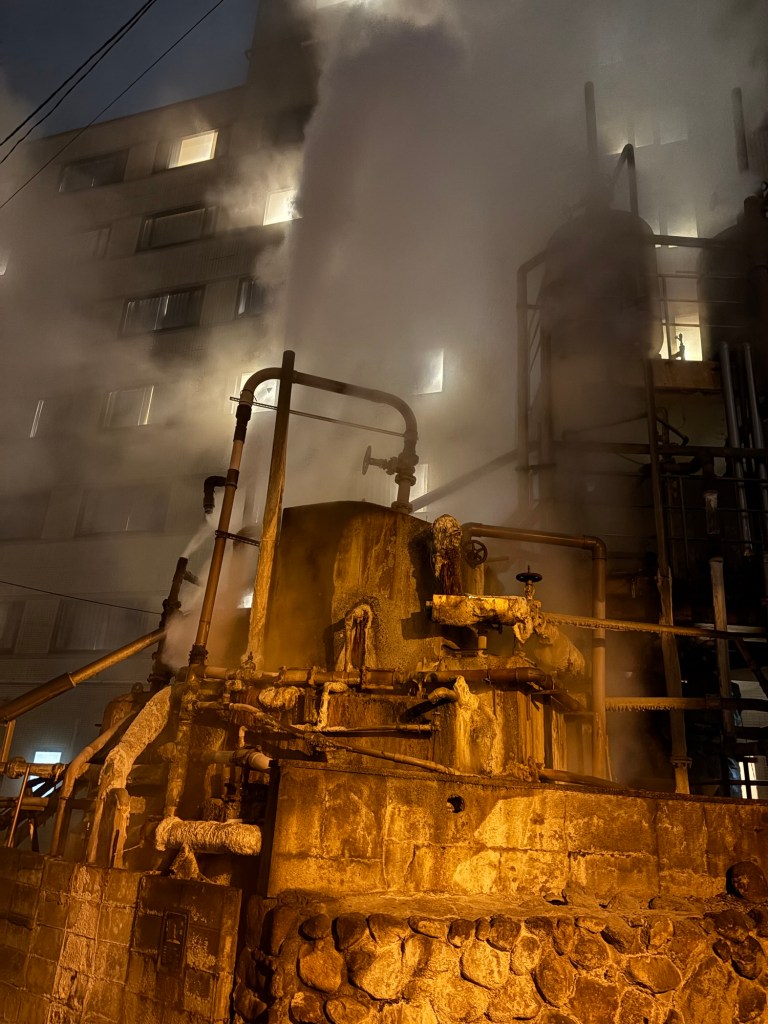
We descended into Beppu onsen, a resort town on the eastern coast of Kyushu. Underneath Beppu volcanic demons are active, and hot water, steam and bubbling mud spew from the ground everywhere. It’s been a spa town for hundreds of years, at first with a medicinal focus. Now lots of visitors from all over the world enjoy a good hot soak. The smell of sulphur hangs in the air.
Marugamiya ryokan taps into this abundant resource to provide a variety of private onsens. Here are some photos from the one Michele and I used. Sometimes the onsen bath is inside, sometimes outside, but the basic setup is the same.
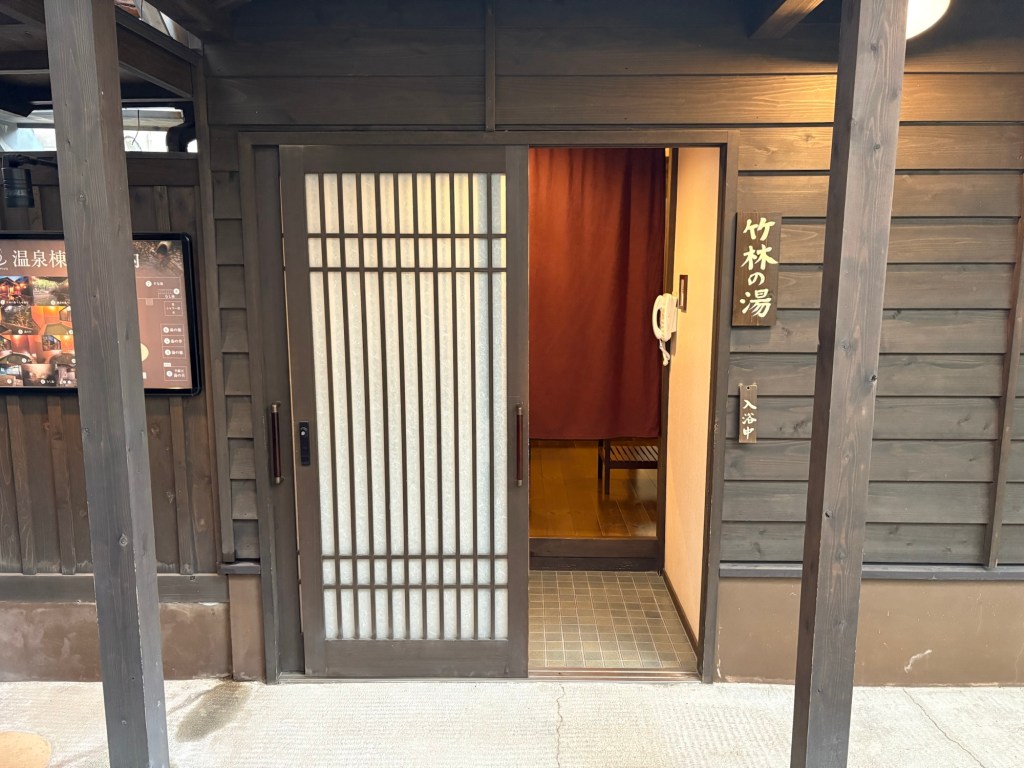
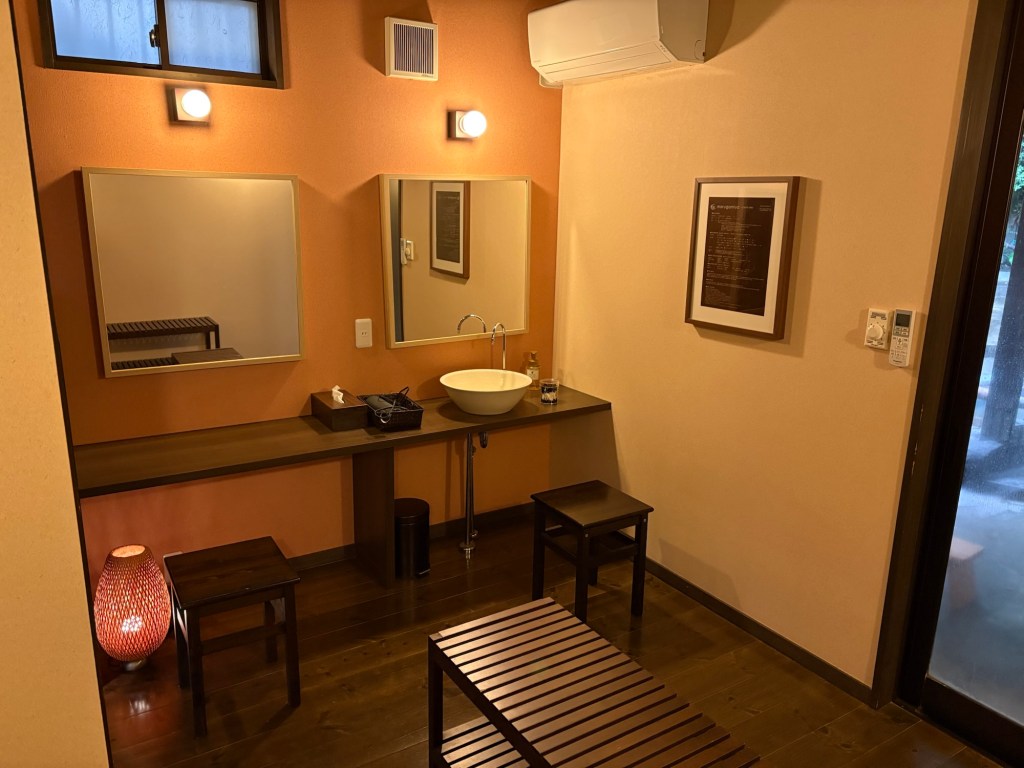
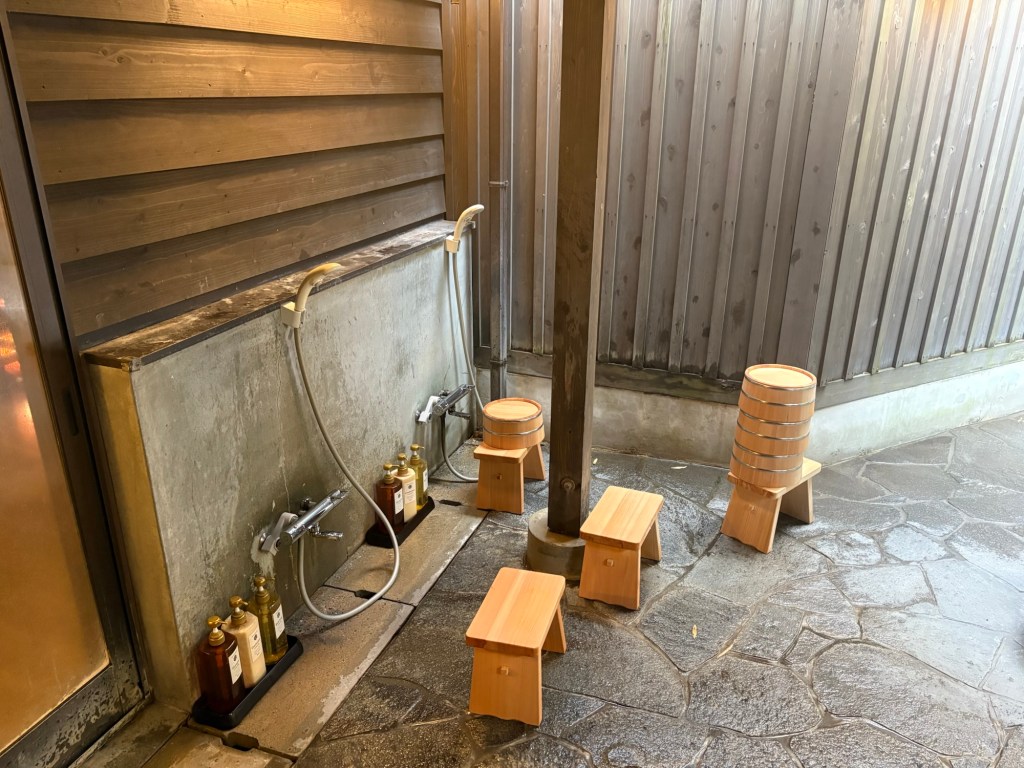
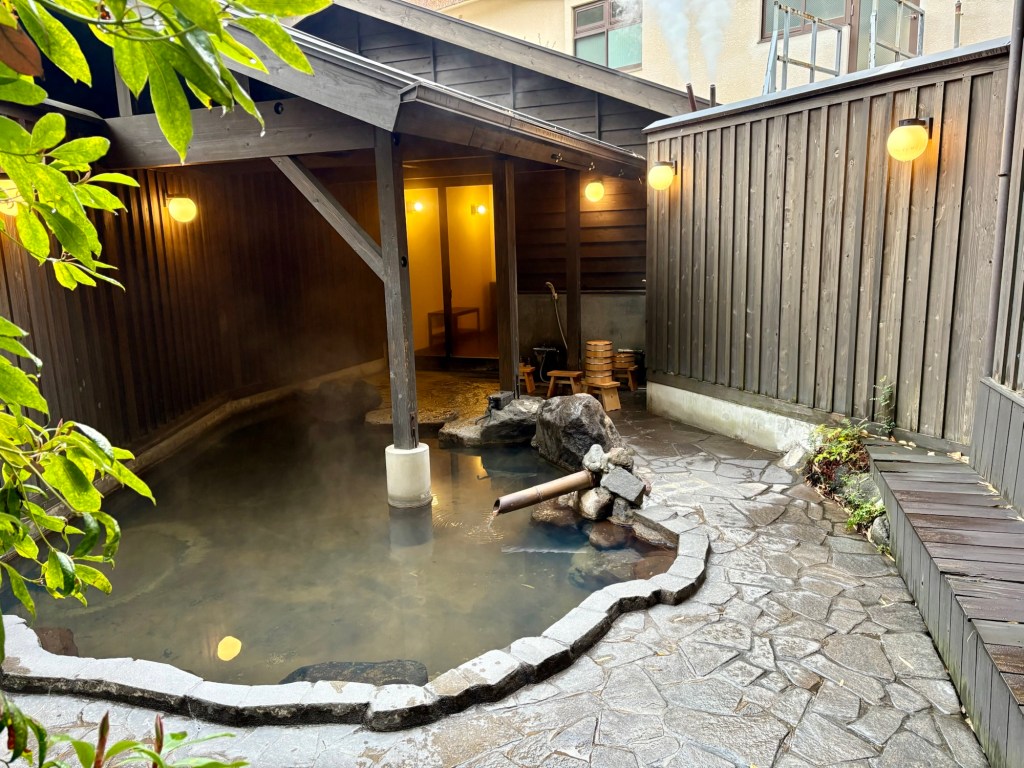
The natural waters are usually cloudy with minerals. Fresh water streams from the source into the bath. This Beppu bath was the hottest of the trip.
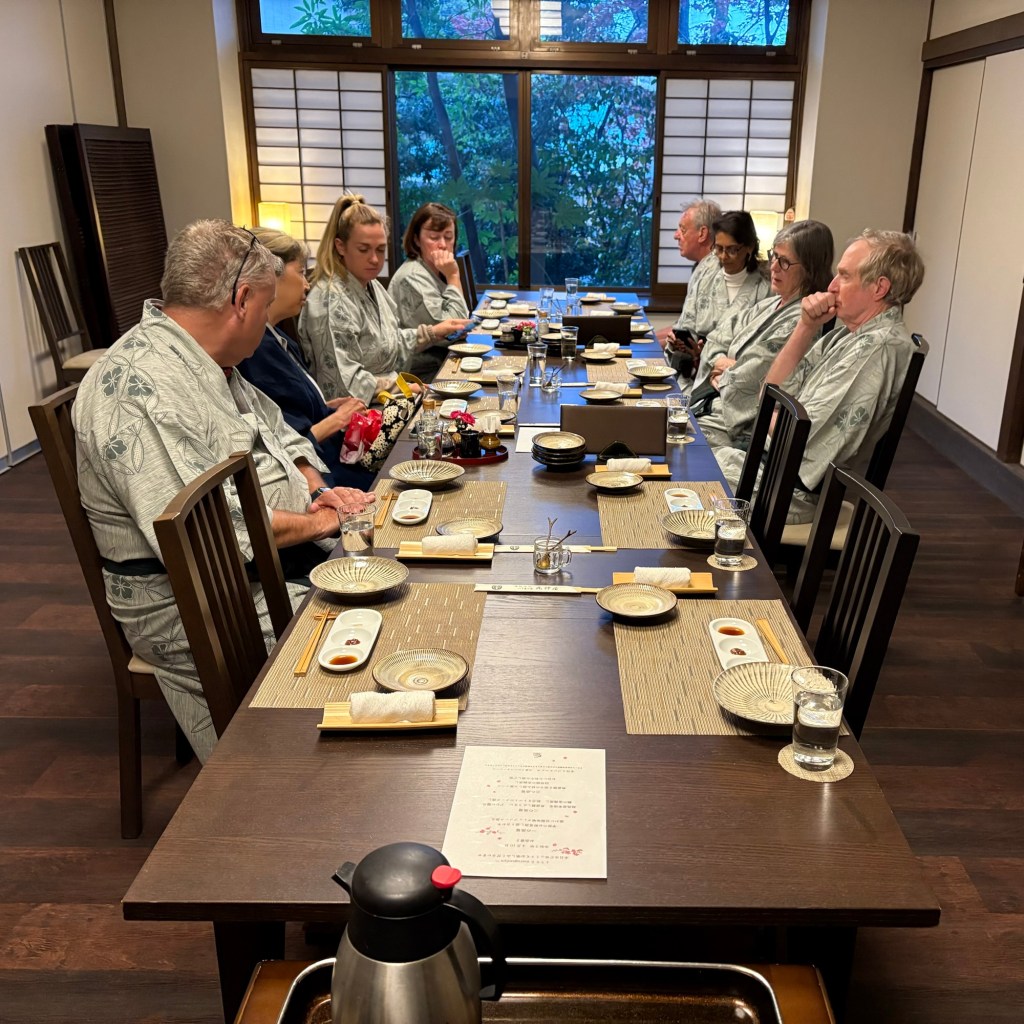
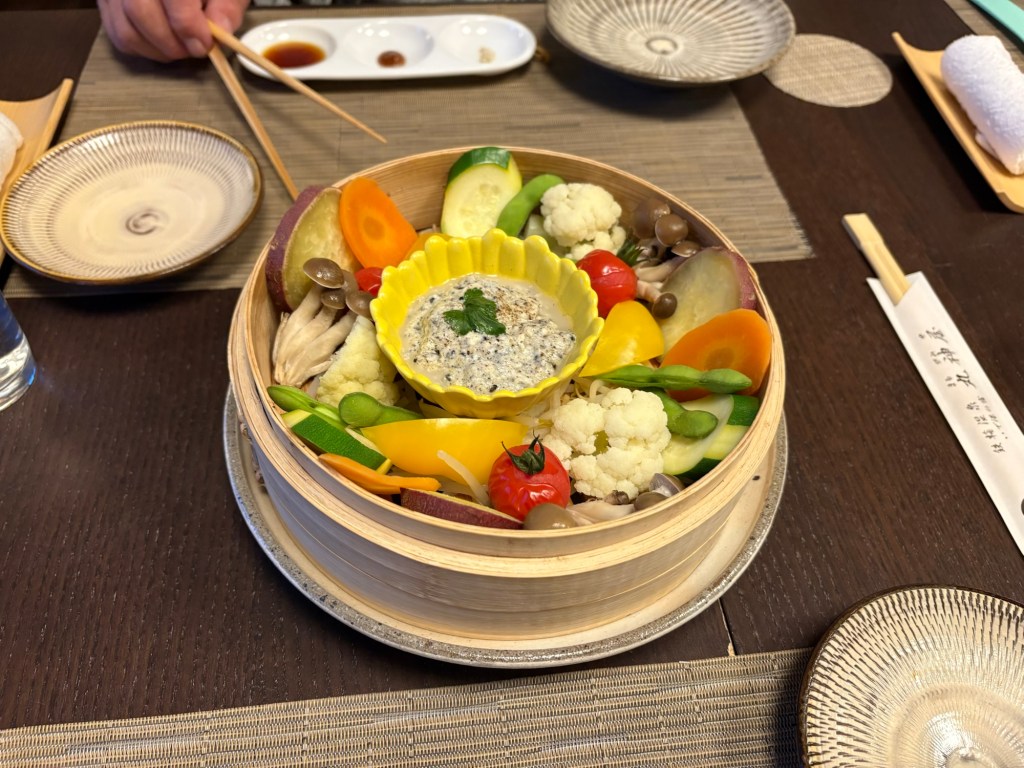
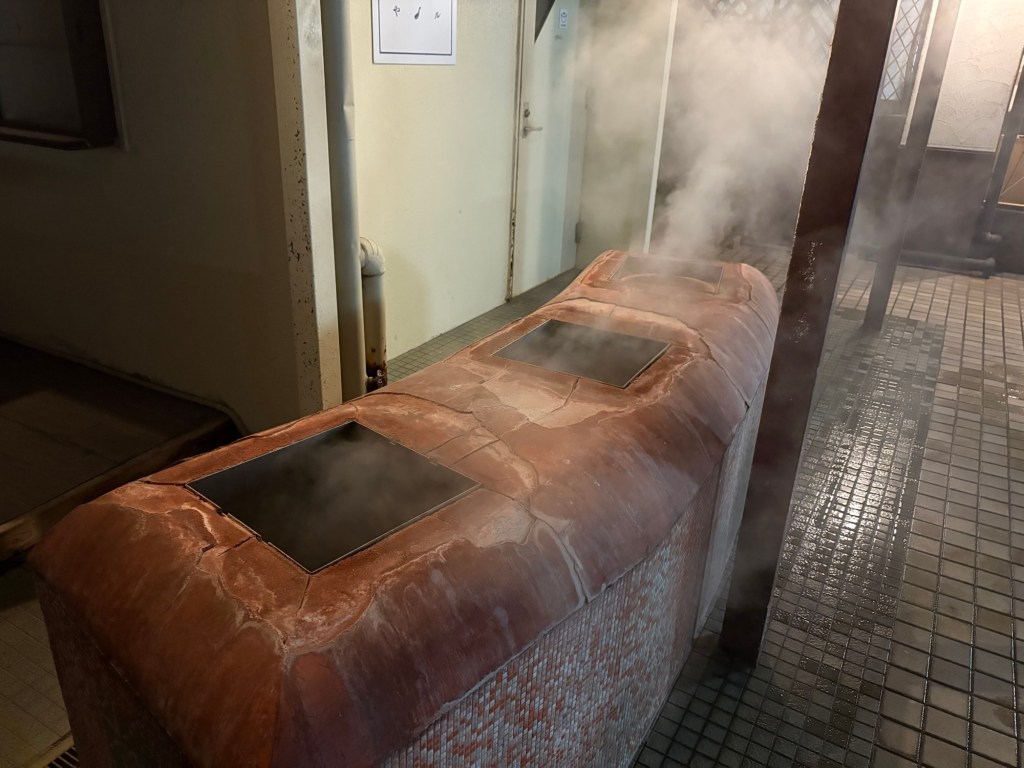
Marugamiya is has a healthy vibe, and the food is all naturally steamed on an outdoor cooker. There are even communal steam cookers around town, where you can bring your own food.
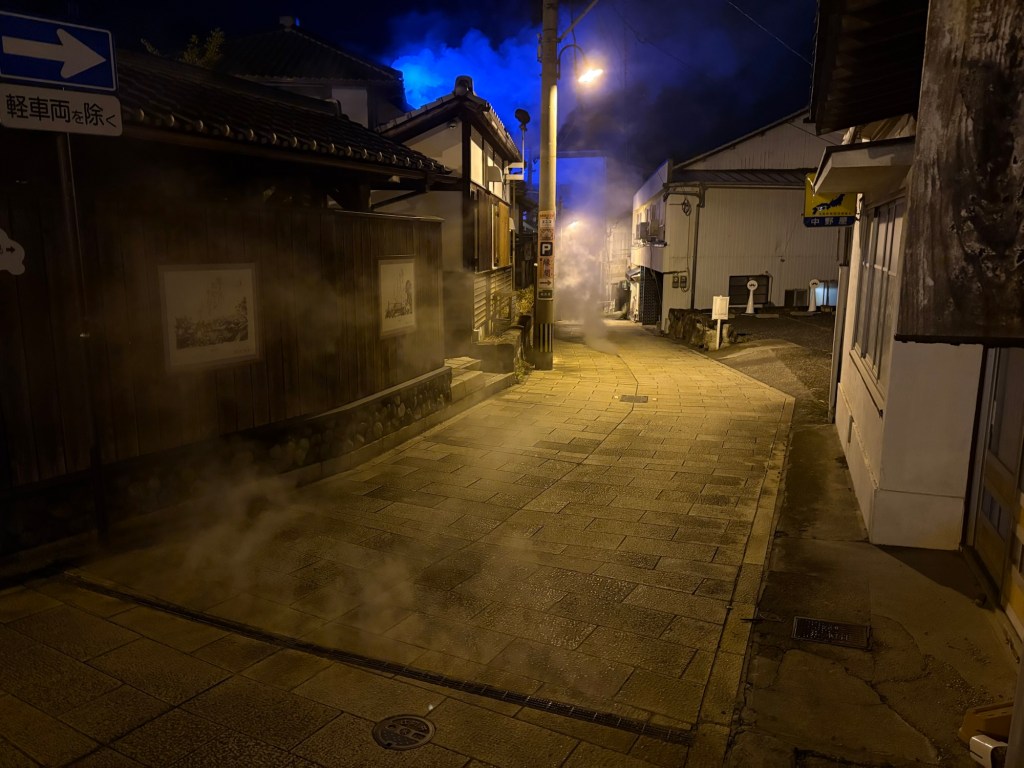
After dinner it had stopped raining and we took a stroll around our neighborhood. We briefly lost a member when she was engulfed in a cloud of steam and by the time it shifted we were out of sight! We found Orla after some running around.
 Ken Chin-Purcell