One of my job titles in our family is tour organizer. I’m the one who books flights, finds hotels, figures out what we might see and how we might get there, good options to eat, navigation and so on. For the next four days I don’t have to do any of that, since we are on a guided tour. The up side of that is that it’s a nice break for me, we have access to some activities that would be hard for me to discover on my own, and in general things run smoothly. The downside is that your correspondent is put into considerably fewer awkward situations. I fear that these next few days will have less travel drama.
Anyway, the dozen of us piled into a little bus and we went up into a river gorge. At the top of this gorge, on the side of Mt. Rakan, is a beautiful temple has been a popular destination ever since Chinese Buddhist monk Xingji was adventuring in the 1300’s and thought the cliff caves were good for meditating. Subsequent travelers had to negotiate a perilous trail around the river gorge cliffs on their way upstream to Rakan-ji temple. Horses and people fell to their demise.
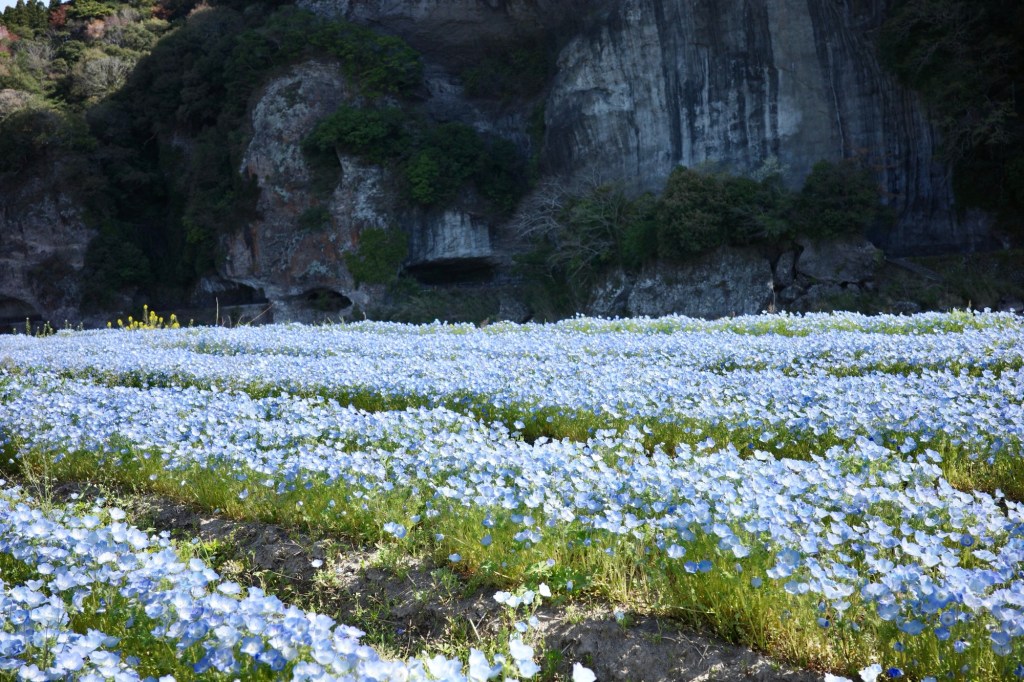
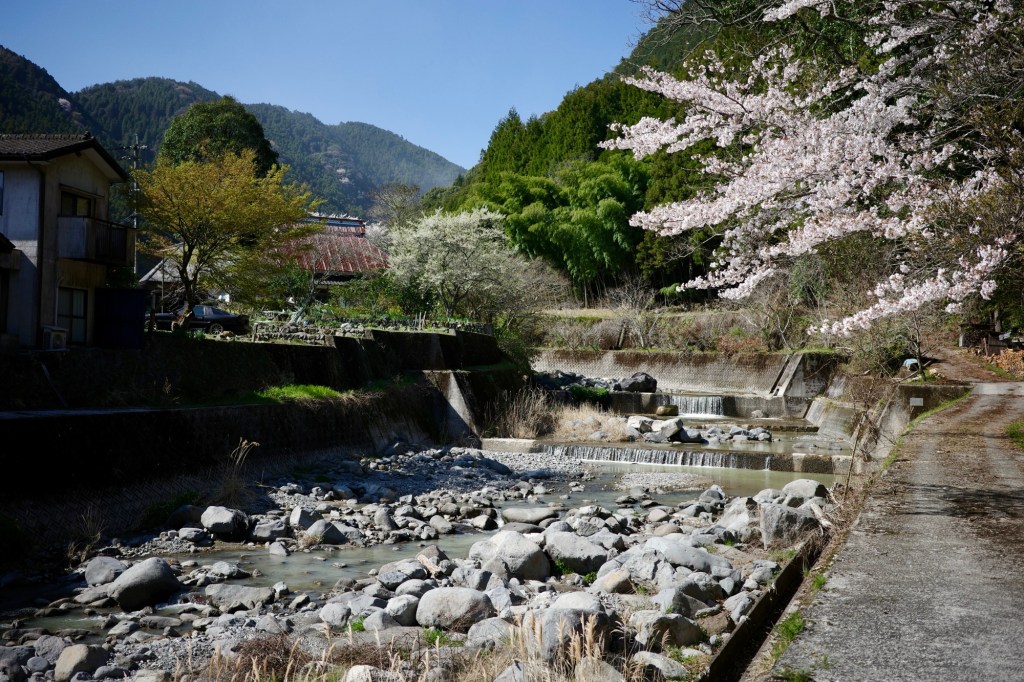
Roll forward to the 1700’s and a Buddhist monk named Zenkai was feeling guilty about his wayward samurai past and also felt bad for the horses and people traversing this treacherous slippery trail. So he set to chiseling a tunnel from the rock. Alone. By hand. It took him 30 years to finish, when he was in his 80’s, and he thus became a legend to Japanese school children as an example of dedication and atonement. The tunnel’s name is Ao-no-Dōmon, Blue Cave Tunnel. You can see it behind the flowers on the other side of the river.
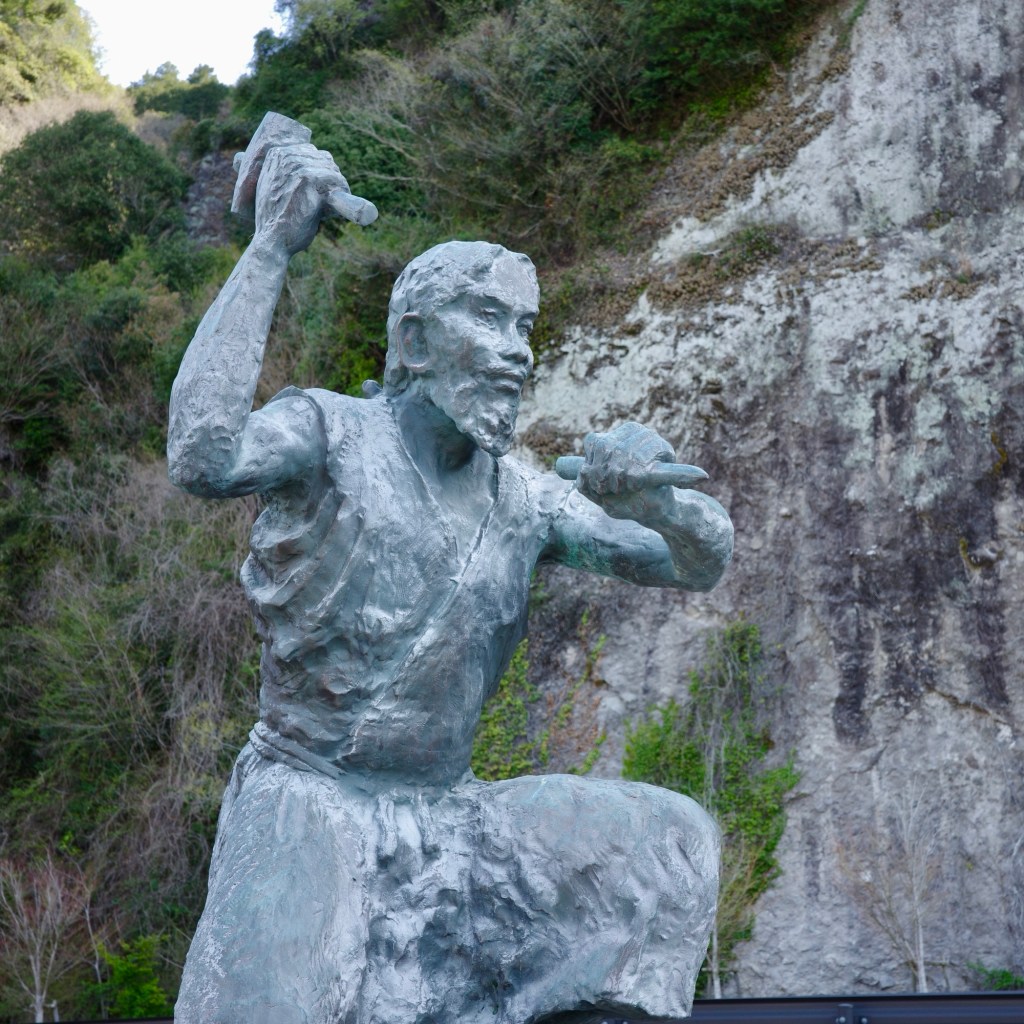
Here is Zenkai showing Japanese youth how you get something done.
Unfortunately part of the tunnel collapsed recently and they’ve closed it off to visitors.
We walked up river to the temple.
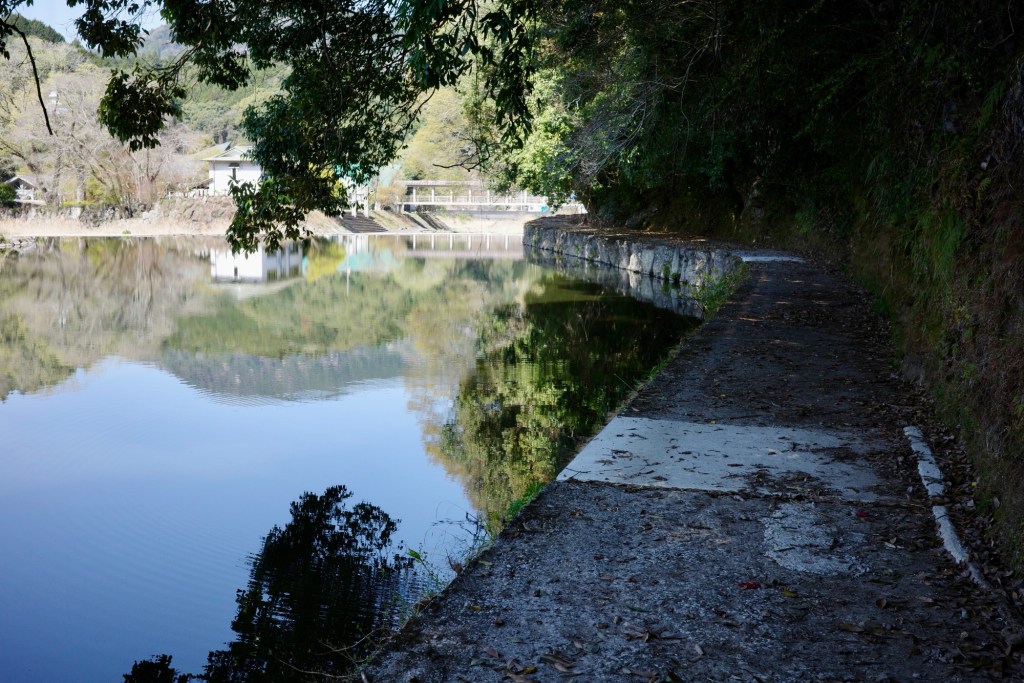
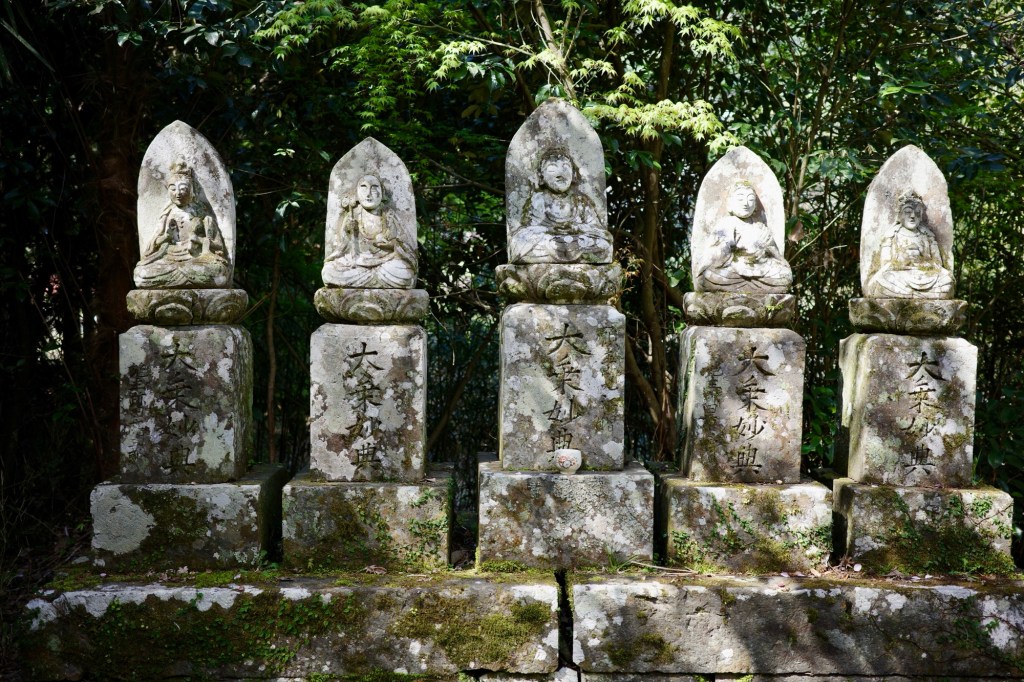
Rakan-ji temple is absolutely gorgeous and absolutely prohibits any photographs. You climb 308 +/- 5 (N=2) steps to a set of temple buildings built into the cliff face. There are beautiful ponds that shimmer reflections on the cave roof, much like the video above of the river on the highway overpass. There are places to write down things you would like to leave behind, and after a zig-zag maze you arrive at a bell to ring. Cherry blossoms flutter in the air. It’s great. There are some mediocre photos at the Wikipedia link above.
After that was a bento lunch at another spot along the river gorge Sarutobi Keikoku.
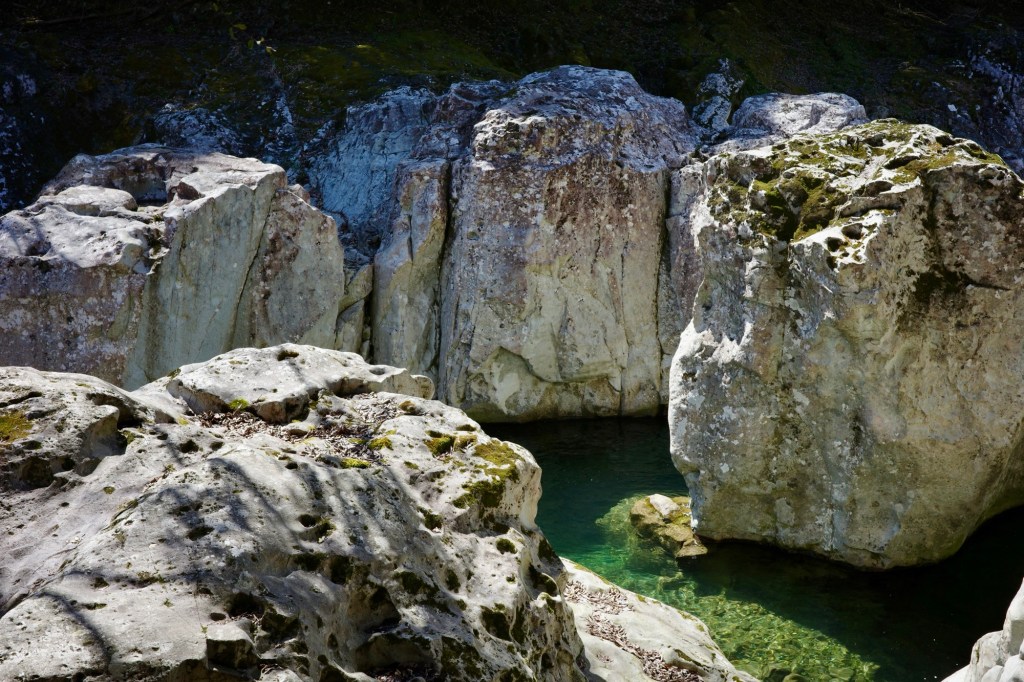
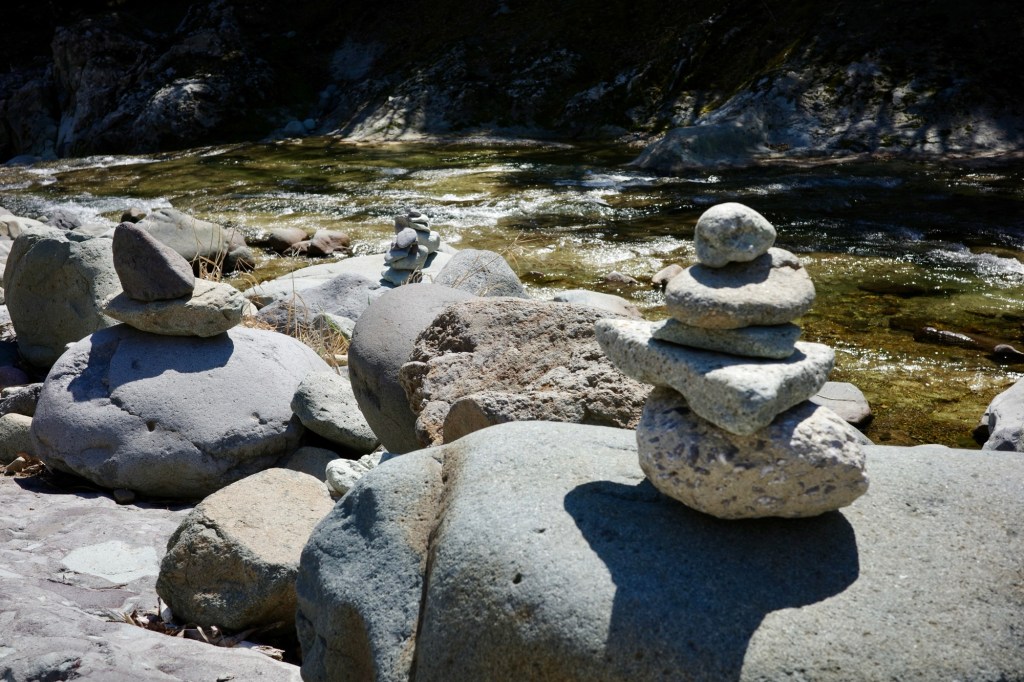
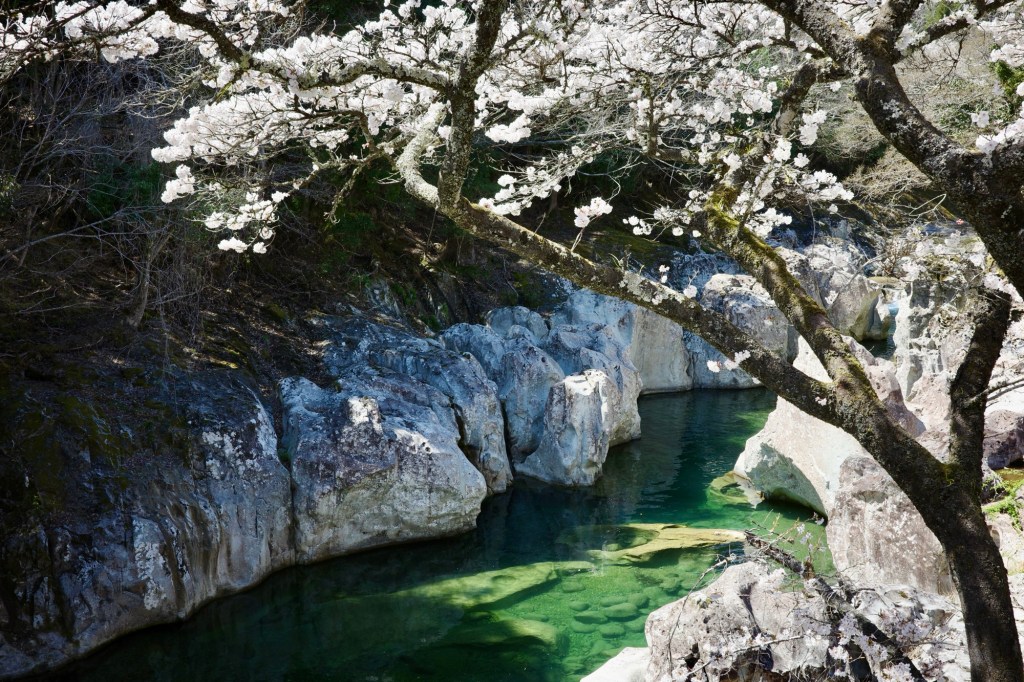
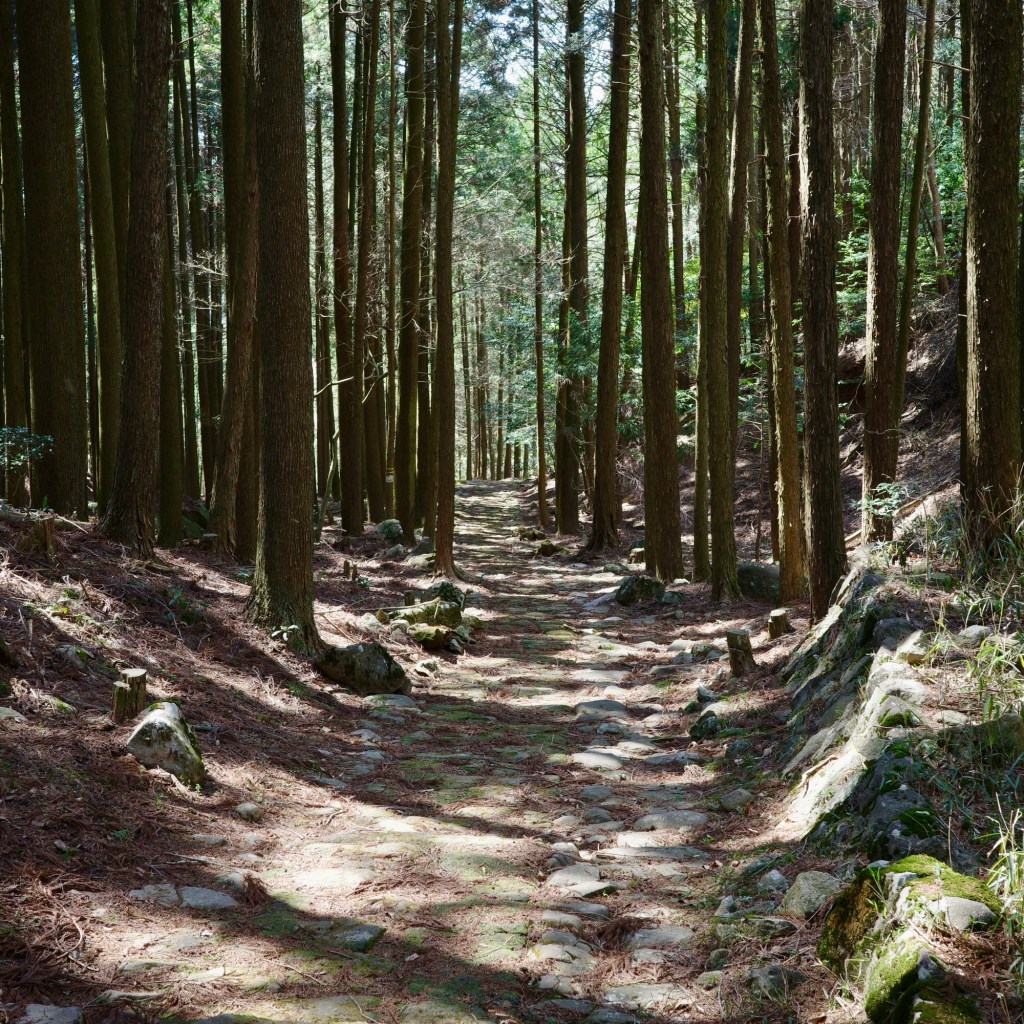
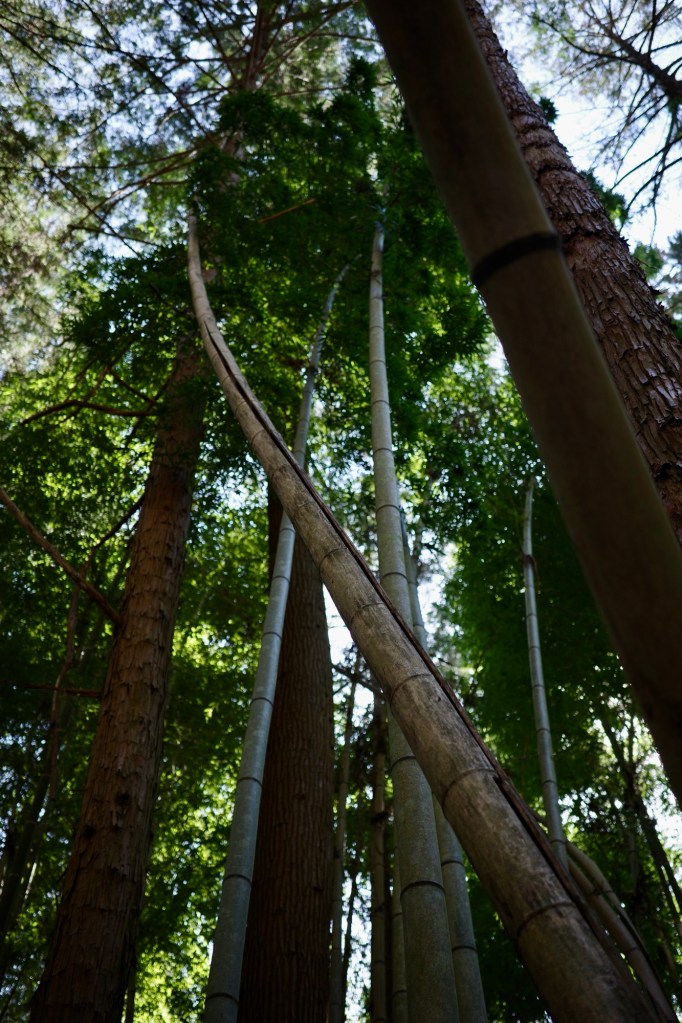
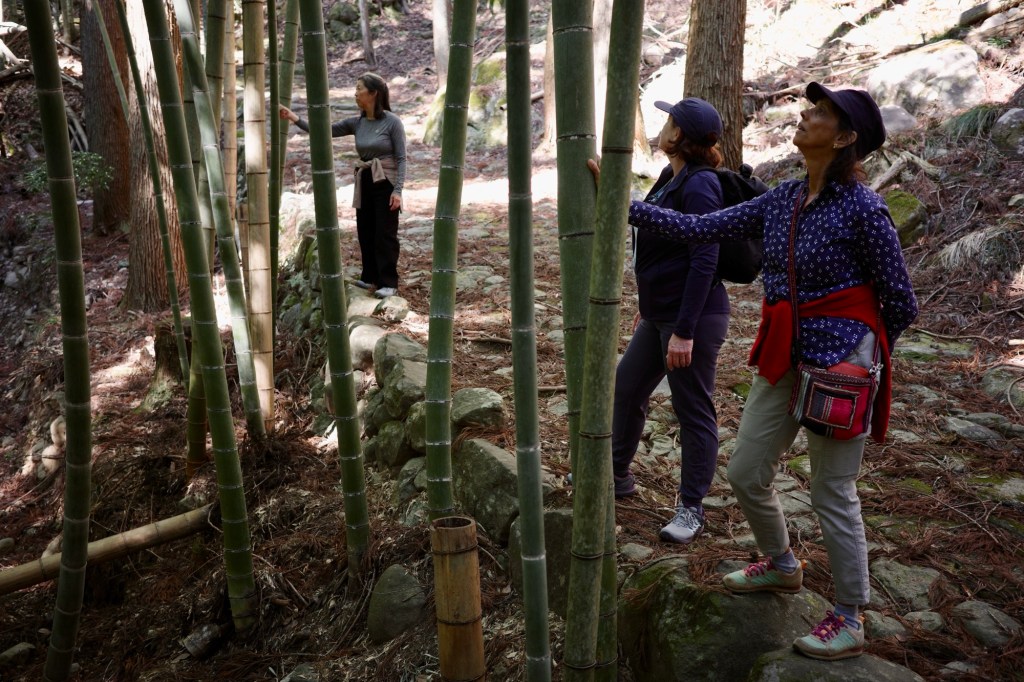
We were headed to Hita for the night, which was the old seat of power for Kyushu. In the Edo period the Tokugawa shogun kept direct control of some key cities across Japan, and centrally located Hita was one of them. It probably didn’t hurt that Hita had a gold mine. Linking Hita to the sea was the Hita Okan, and we walked a long section of the ishidatami stone paving that still remains. We traversed down a hill through a bamboo grove until we hit a river. The old stones ended there, and after a walking bit further we got back in the van and followed the old route into Hita.
Hotel “caffel Hinano Sato” was a very funky place. It’s a modern-ish style seven story hotel right on the river in Hita, decorated top to bottom with Audrey Hepburn, The Beatles and Albert Einstein. We were on a Beatles floor. There was a relaxation room with aggressive massage chairs. Any cubby, like for shoes or at the onsen, was tagged with a cute sticker. A large collection of vinyl was on display in the lobby, although the turntable always had a Beatles album on it.
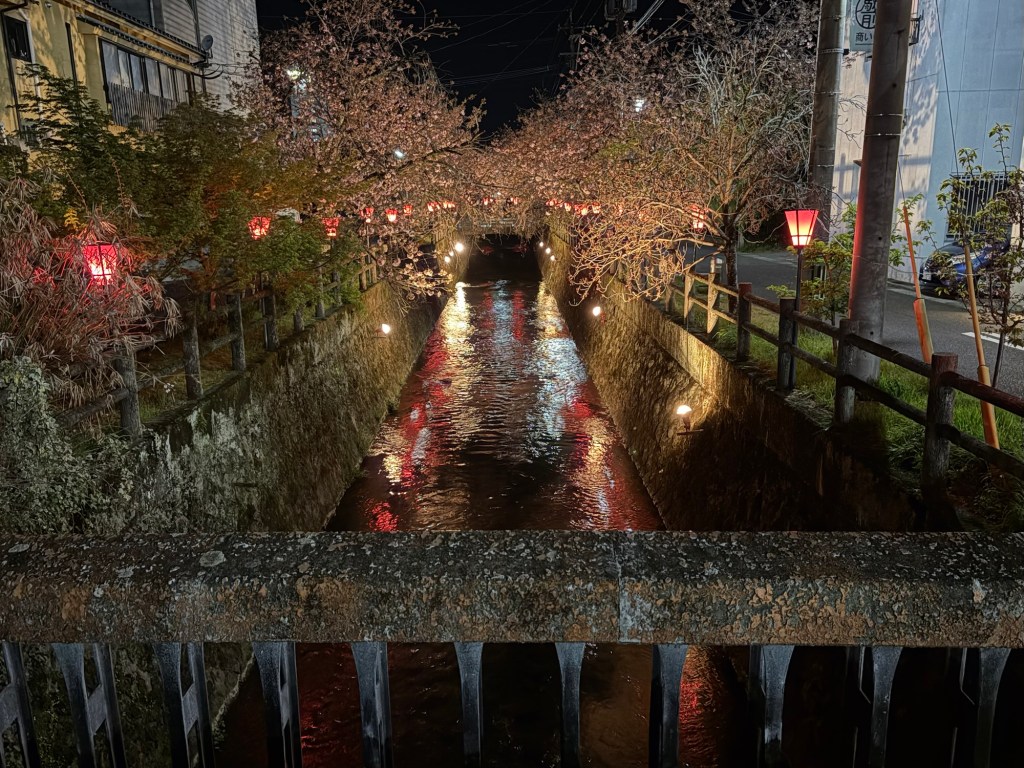
There was a nice display of lanterns on the way back from dinner.
 Ken Chin-Purcell