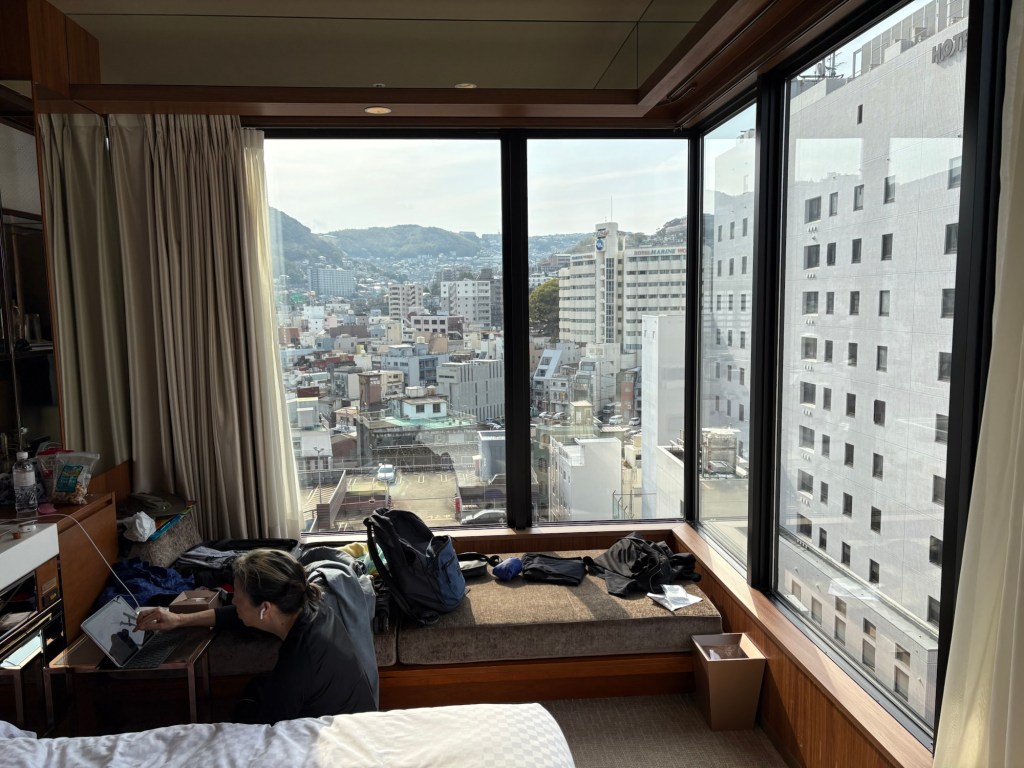
Candeo Hotel Nagasaki is suiting us well. It’s a twelve story tower in a “lobby on top” format that I’ve seen several times now in Japan. The ground level entrance to the hotel is a fancy door into a small elevator lobby. Your only elevator choice is to go up 11 floors. Otherwise the ground floor is general retail, in our Candeo’s case a Japanese version of Walgreens. The hotel reception and lounge is up on top (11th floor), the rooms are below that. Candeo has a “Sky Spa” on the top 12th floor, men’s and women’s onsens with outside rooftop pools overlooking the city lights. Here is the view from our 10th floor room.
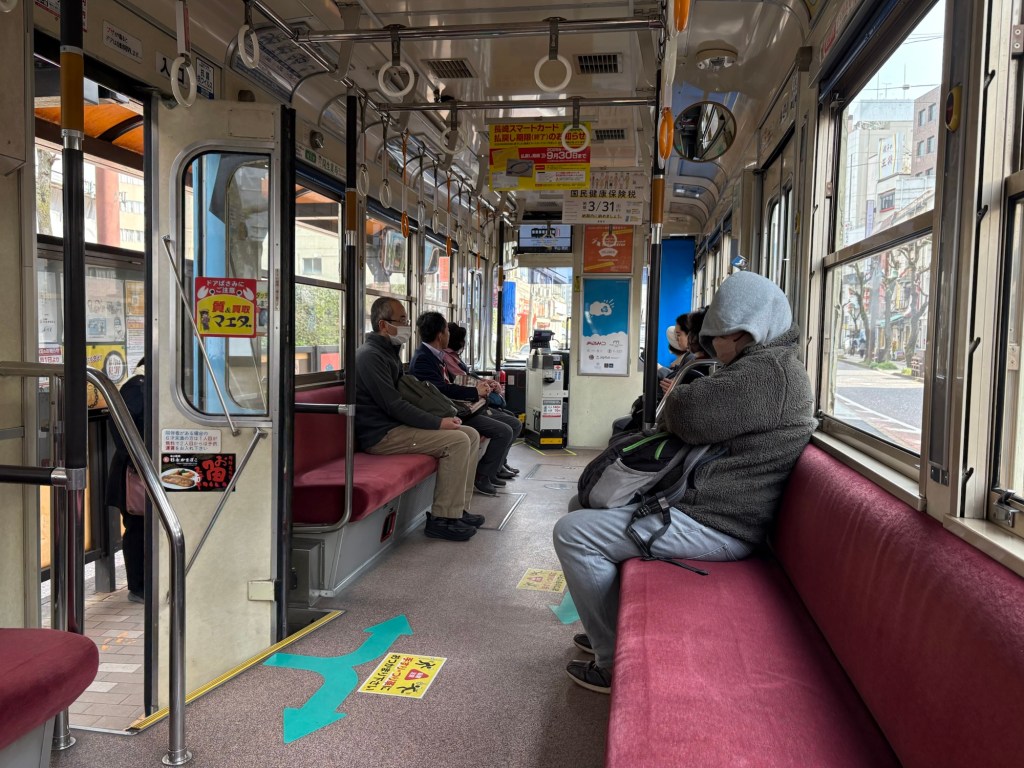
Nagasaki has several street car lines with classic old style trams, and we hopped on one towards Suwa Shrine. The busses and trams here all work with the Suica card, in our case virtual cards on our iPhones. If you visit Japan with an Apple phone be sure to load a virtual Suica card via Wallet, then add a few thousand yen to it. Riding the bus/tram/train is now effortless, just tap on and tap off.
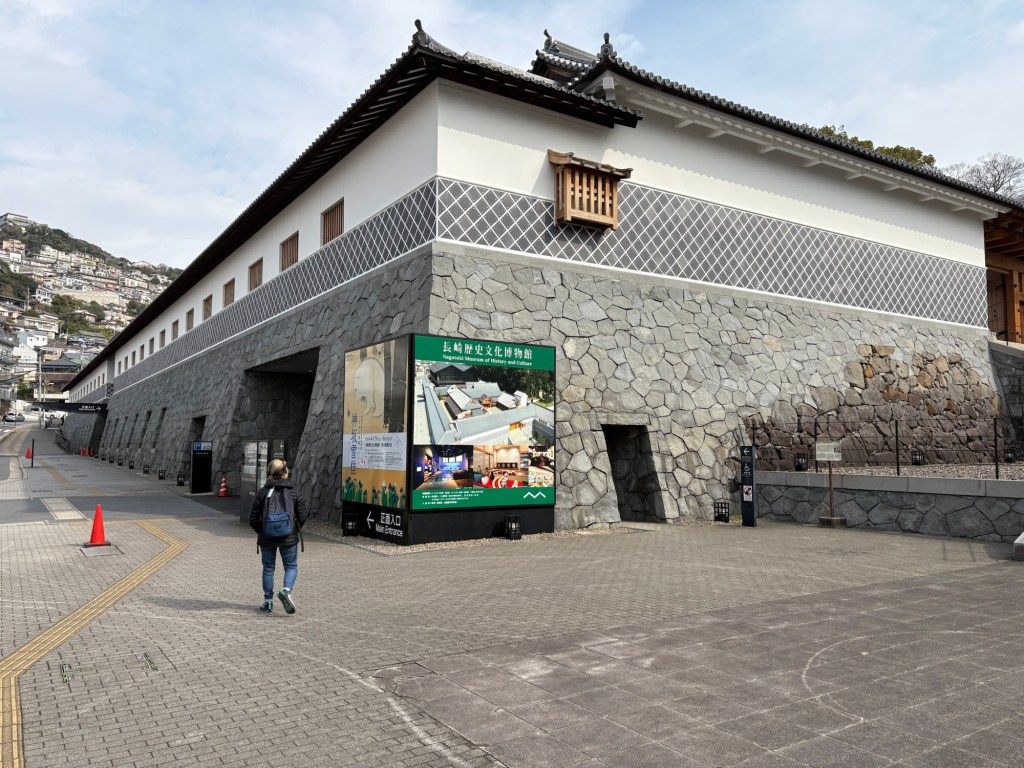
Our first destination was the Nagasaki Museum of History and Culture. Dejima yesterday had impressive buildings but was a little light on the contents. The NMH&C however not only looked impressive but had excellent content to boot.
The main takeaway is that during the Edo period, for hundreds of years, Nagasaki was Japan’s interface with the outside world, and visa versa. Anyone with the means and an ounce of worldly inclinations in Japan headed to Nagasaki to either study and/or make their fortune.
This included Japan’s communication with Chinese culture. There were beautiful screens and paintings of Chinese processions in Nagasaki, including things like dancing lions, dating from around 1600. And Edo Kotobuki Jishi (KBJ), the Japanese lion dance that Michele is learning, also dates from the same period. Coincidence? We think not. OK, we’re not historians, but it sure seems like we have stumbled on the origins of KBJ right here in Nagasaki. Shishi watch continues.
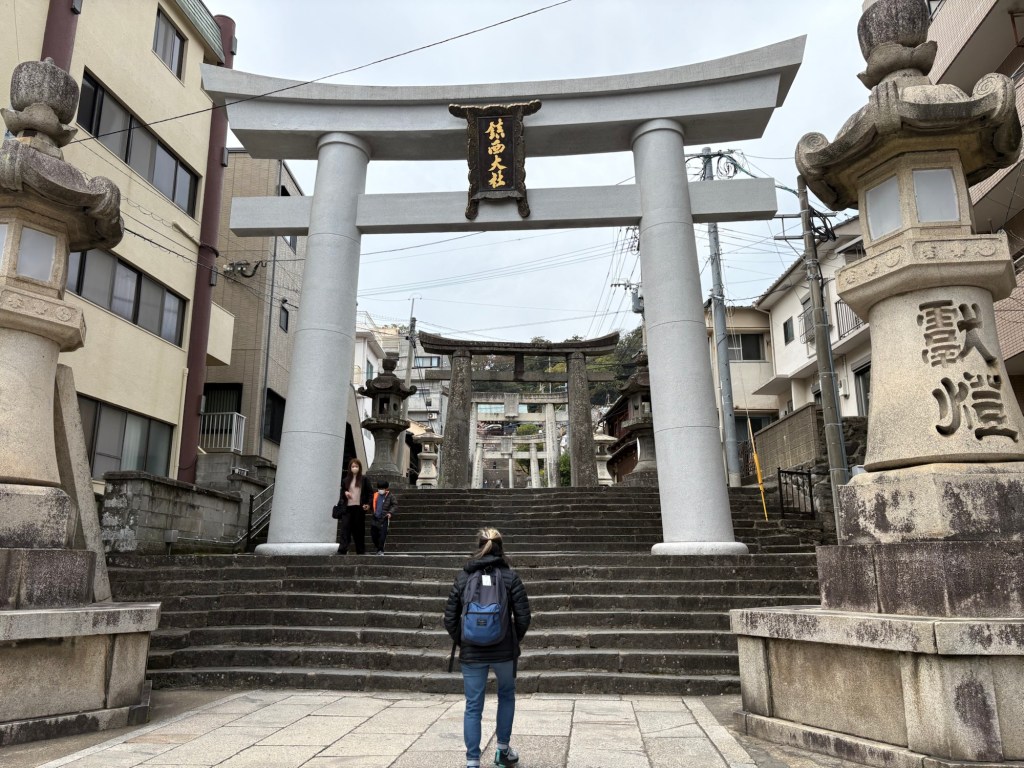
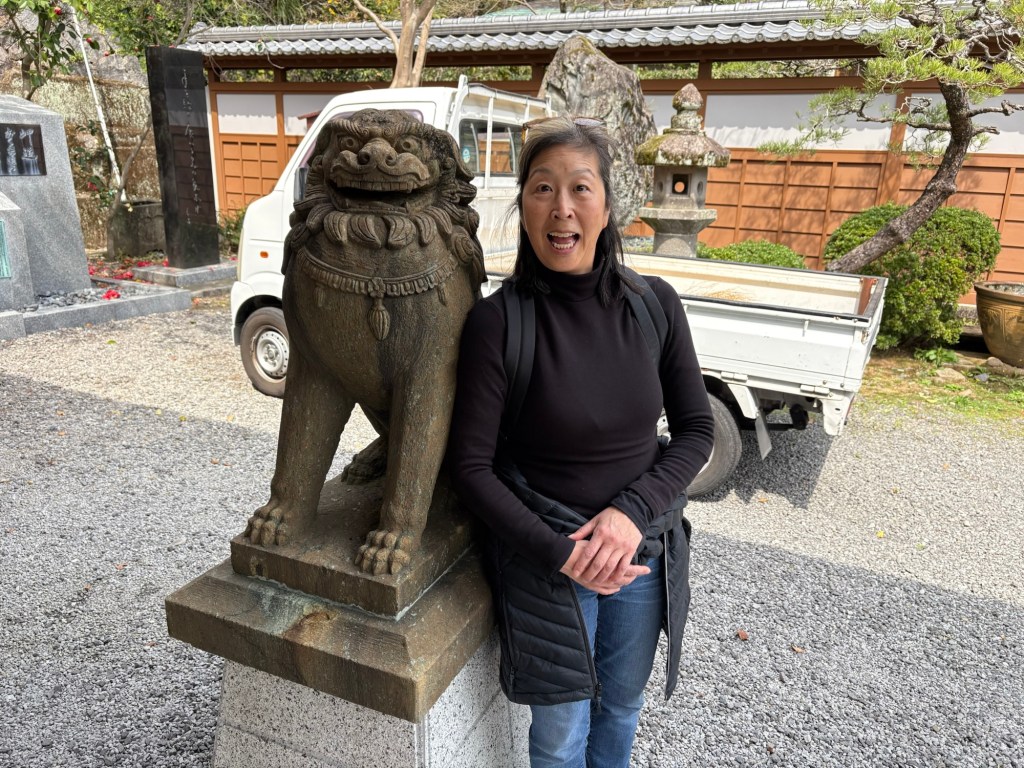
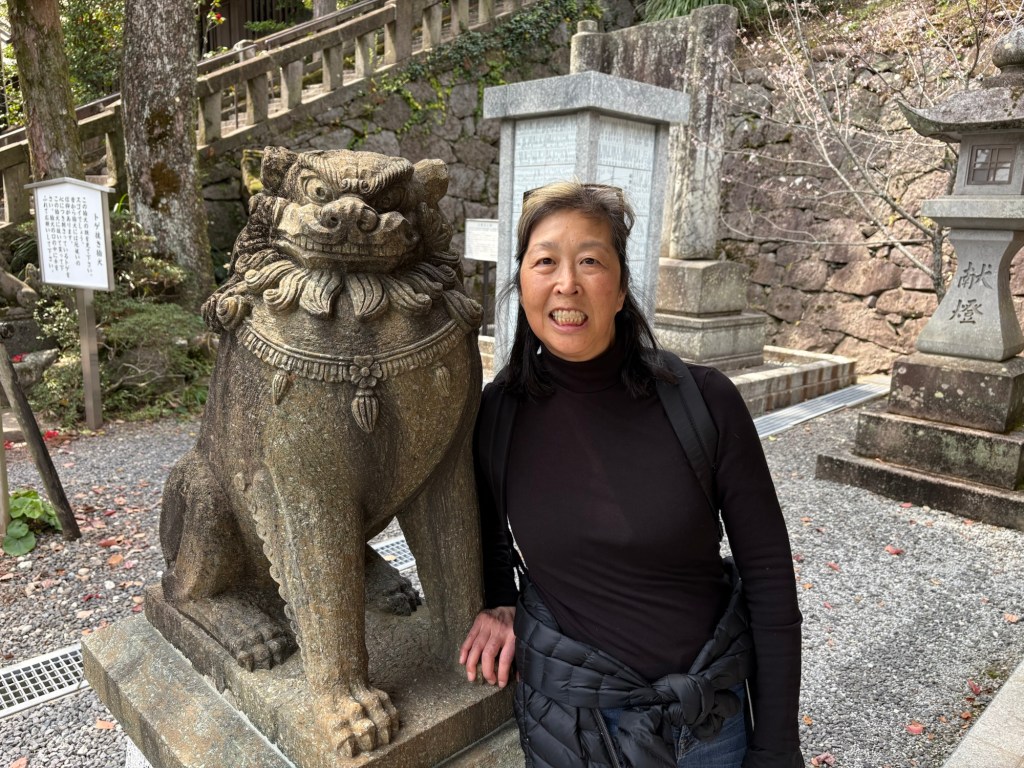
We popped into a 2nd floor restaurant for lunch and had some great tonkatsu. It hasn’t been hard to find good food so far. Then we started climbing steps to Suwa shrine, stopping at some Shishi along the way.
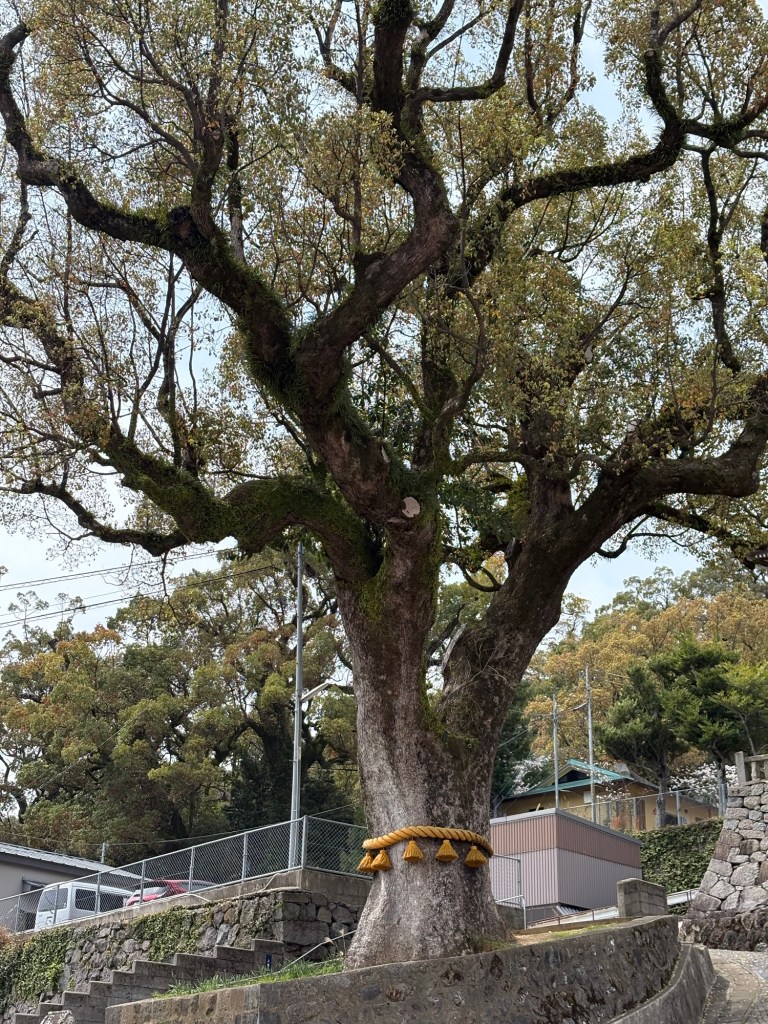
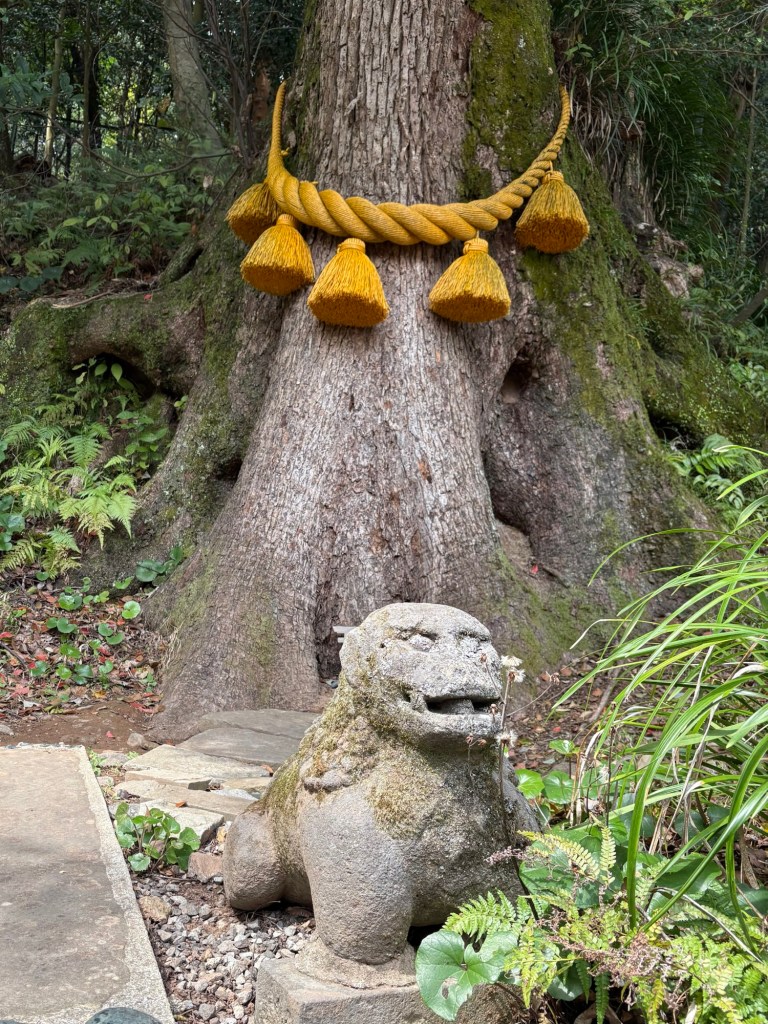
There we a couple of trees with ceremonial ropes around their trunks.
And a tunnel of torī.
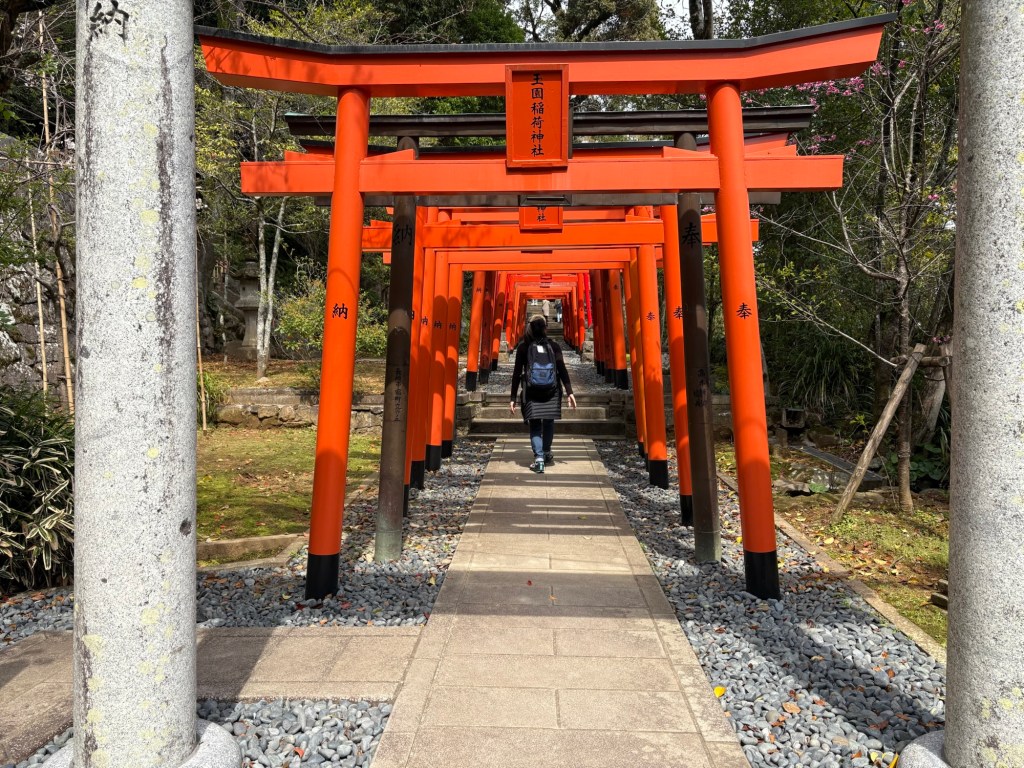
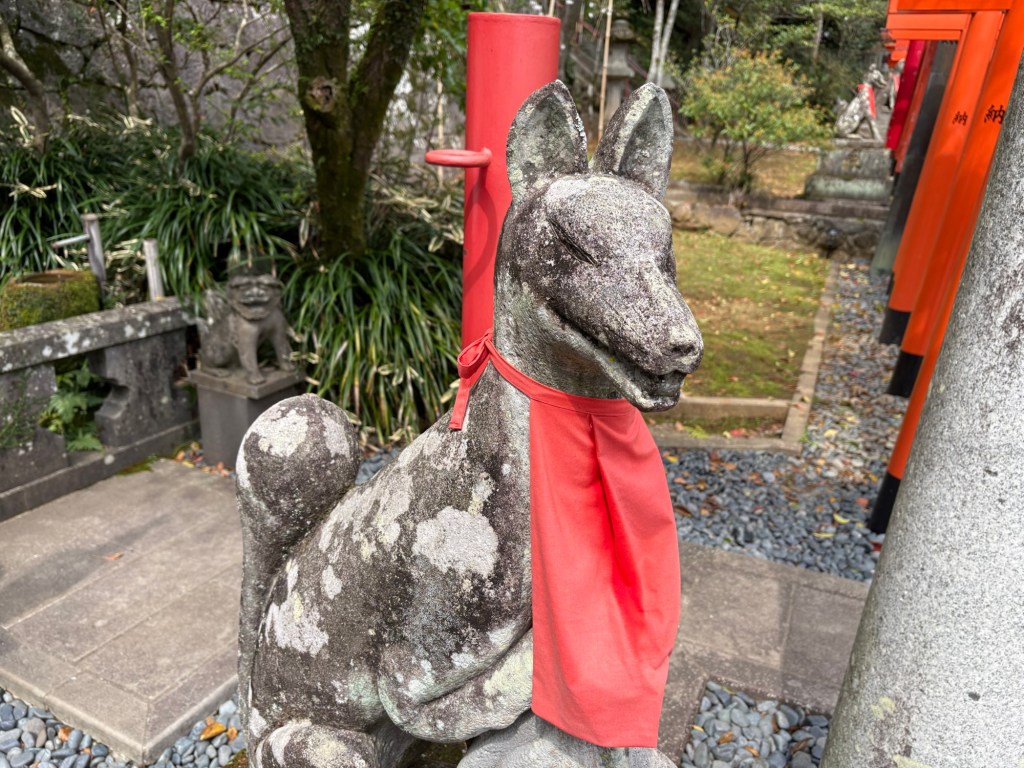
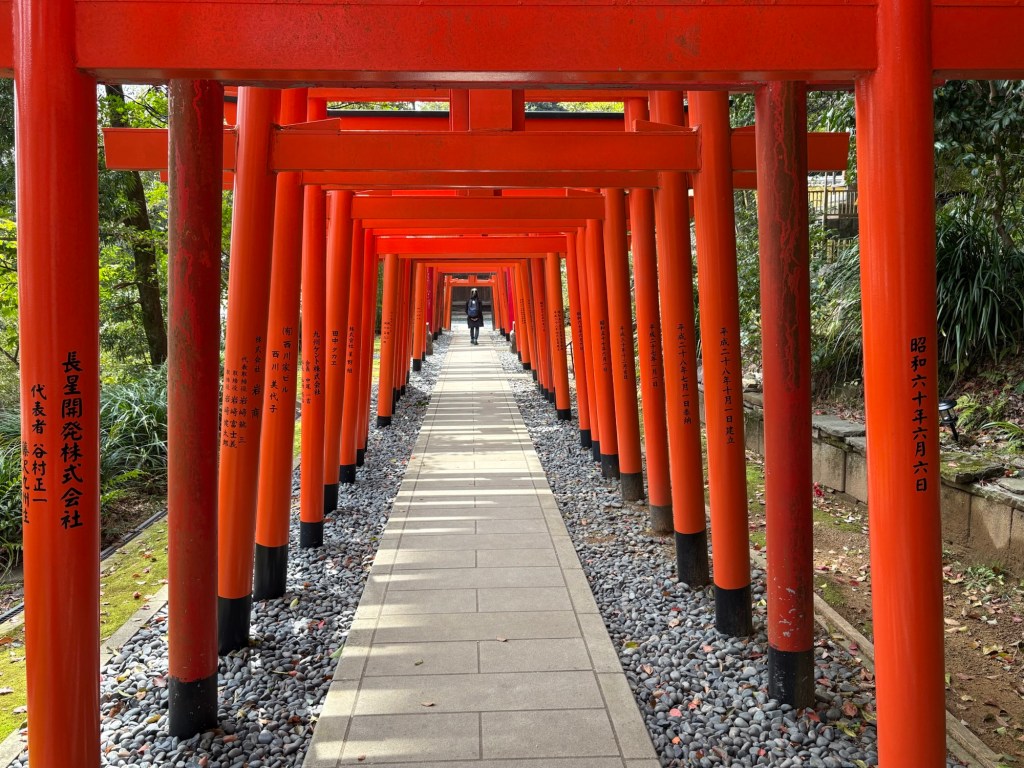
The shrine itself was impressive, but it was also in use, so I refrained from taking photos. We heard some taiko as we climbed the steps, but that was done by the time we arrived.
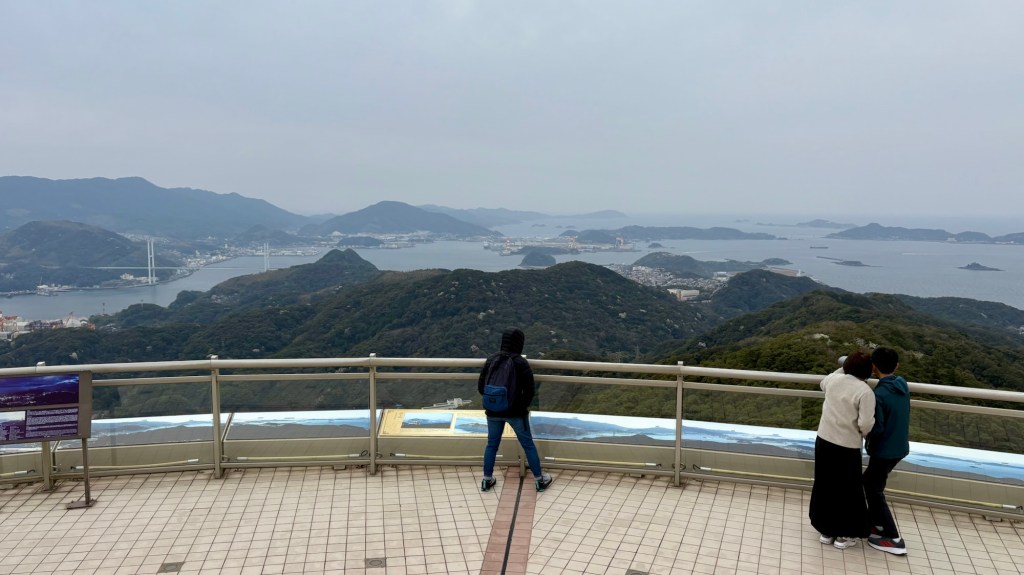
Afterwards we took the ropeway gondola to Mt. Inasa, for a panoramic view of the harbor.
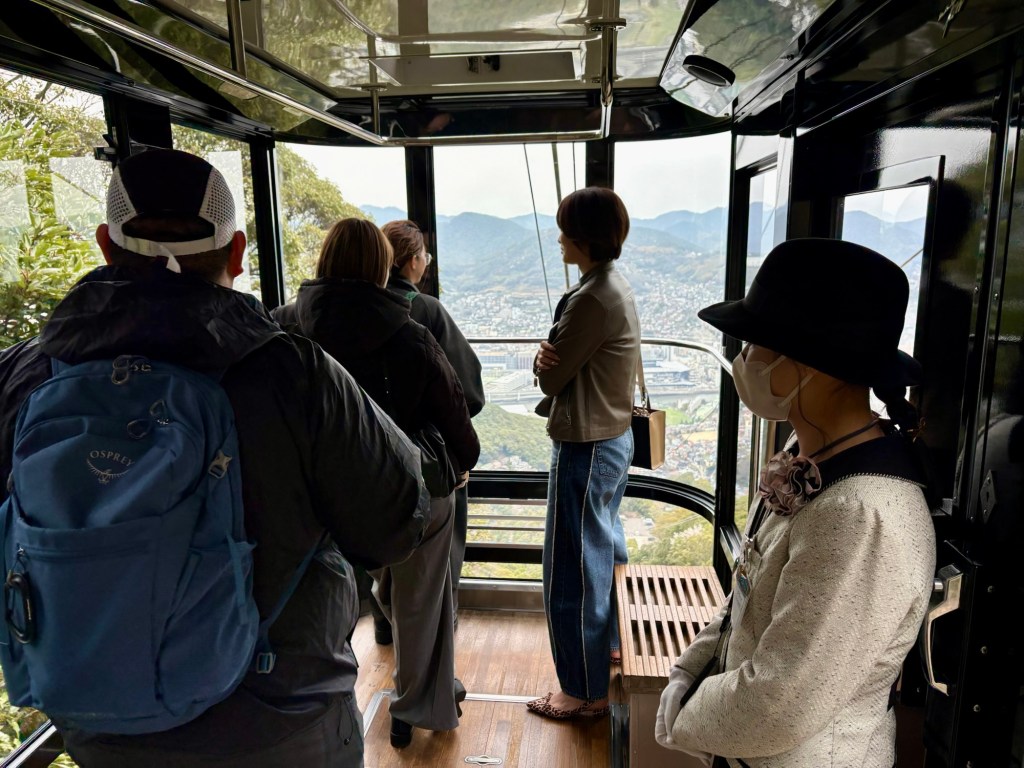
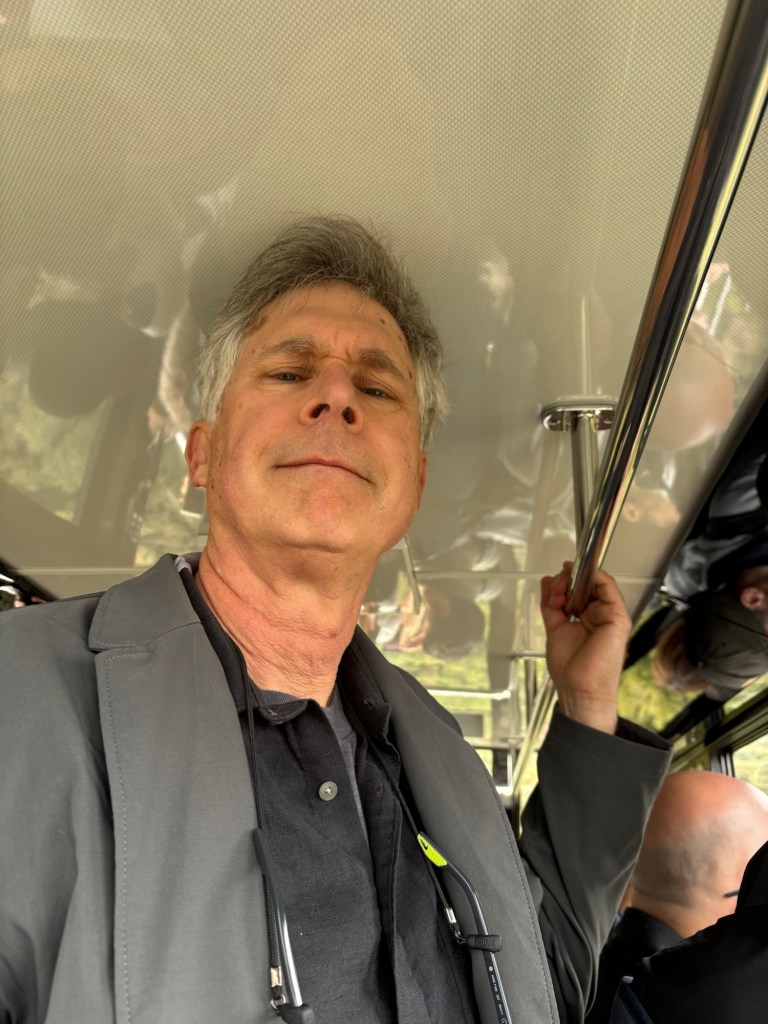
The gondola company repeatedly made the point that the vehicles were designed by a guy who also worked for Ferrari. Whoop-Dee-Doo, I still don’t fit.
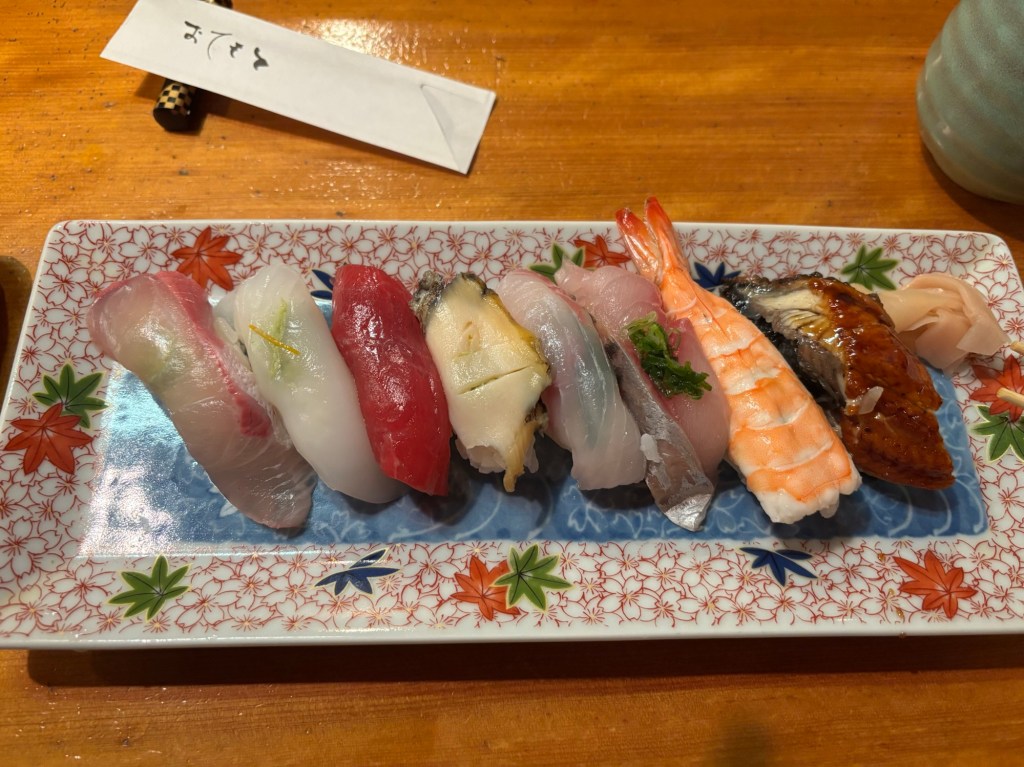
Dinner was at a lovely sushi bar, where I wished we knew some more Japanese. The owner was very chatty.
 Ken Chin-Purcell